


English



₹18678
₹23950
22.01% OFF
(All inclusive*)
Hardback
Delivery Options
Please enter pincode to check delivery time.
*COD & Shipping Charges may apply on certain items.
Review final details at checkout.
Looking to place a bulk order? SUBMIT DETAILS
Delivery Options
Please enter pincode to check delivery time.
*COD & Shipping Charges may apply on certain items.
Review final details at checkout.
About The Book
Description
Author
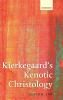
The orthodox doctrine of the incarnation affirms that Christ is both truly divine and truly human. This however raises the question of how these two natures can co-exist in the one united person of Christ without undermining the integrity of either nature. Kenotic theologians address this problem by arguing that Christ ''emptied'' himself of his divine attributes or prerogatives in order to become a human being. David R. Law contends that a type of kenotic Christology is present in Kierkegaard''s works developed independently of the Christologies of contemporary kenotic theologians. Like many of the classic kenotic theologians of the 19th century Kierkegaard argues that Christ underwent limitation on becoming a human being. Where he differs from his contemporaries is in emphasizing the radical nature of this limitation and in bringing out its existential consequences. The aim of Kierkegaard''s Christology is not to provide a rationally satisfying theory of the incarnation but to highlight the existential challenge with which Christ confronts each human being. Kierkegaard advances ''existential kenoticism'' a form of kenotic Christology which extends the notion of the kenosis of Christ to the Christian believer who is called upon to live a life of kenotic discipleship in which the believer follows Christ''s example of lowly humble and suffering service. Kierkegaard thus shifts the problem of kenosis from the intellectual problem of working out how divinity and humanity can be united in Christ''s Person to the existential problem of discipleship.

Piracy-free

Assured Quality

Secure Transactions

Fast Delivery

Sustainably Printed
Details
ISBN 13
9780199698639
Publication Date
-10-01-2013
Pages
-328
Weight
-560 grams
Dimensions
-156x234x19.05 mm
