

English


₹4195
(All inclusive*)
Paperback
Delivery Options
Please enter pincode to check delivery time.
*COD & Shipping Charges may apply on certain items.
Review final details at checkout.
Looking to place a bulk order? SUBMIT DETAILS
Delivery Options
Please enter pincode to check delivery time.
*COD & Shipping Charges may apply on certain items.
Review final details at checkout.
About The Book
Description
Author
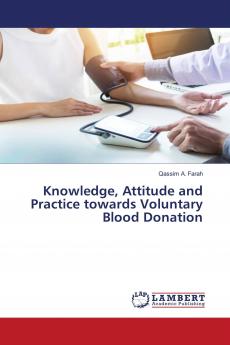
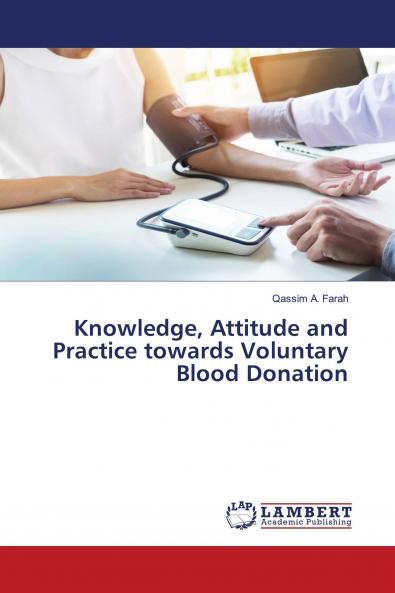
The study investigated the knowledge attitude and practice towards voluntary blood donationamong adult people in Borama town Somaliland. Blood is unique body fluid that performs vitalfunctions for humans by carrying oxygen and nutrients to the cells and carrying out carbondioxide and metabolic wastes away from those same cells. A voluntary blood donation meansgives blood plasma or cellular components of his or her own free will and receives no paymenteither in the form of cash or in kind which could be considered a substitute for money. Voluntaryblood donation will be characterized as knowledge attitude and practice. Globally over 100million blood units are collected annually throughout the world and yet many more is needed toachieve global demand to guarantee adequate and timely availability of blood. In a surveyconducted by WHO in 2006 reported that more than 70 countries had blood donation rates lessthan the WHO established standard of 1% or 10 donations per 1000 population. In Somalilandwhere severe blood shortage is evident almost 2000 women die every year from pregnancy orchildbirth complications.

Piracy-free

Assured Quality

Secure Transactions

Fast Delivery

Sustainably Printed
Details
ISBN 13
9786203928884
Publication Date
-08-07-2021
Pages
-84
Weight
-121 grams
Dimensions
-150x220x4.92 mm
