


This Book is Out of Stock!
English


Hardback
₹18975
(All inclusive*)
Delivery Options
*COD & Shipping Charges may apply on certain items.
Review final details at checkout.
Looking to place a bulk order? SUBMIT DETAILS
*COD & Shipping Charges may apply on certain items.
Review final details at checkout.
₹18975
Out Of Stock
All inclusive*
About The Book
Description
Author
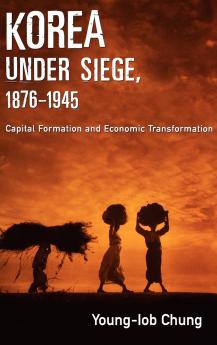
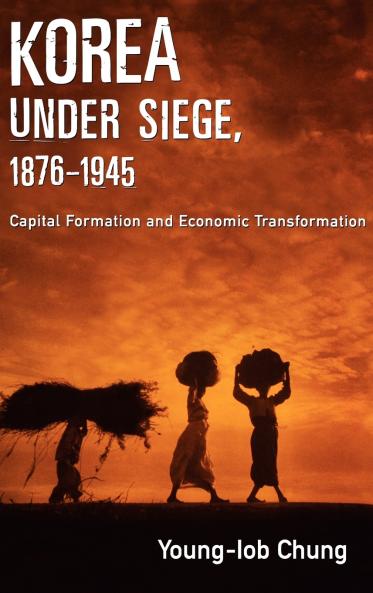
The so-called miraculous economic development in the southern half of the Korean peninsula has transformed from basically an agrarian economy to that of a major industrial power in a very short time period and it is now considered one of a dozen or so of industrialized countries in the world. However there has been little careful analysis especially by Western scholars of the heritage of the Korean economy in the traditional and transitional periods from which it launched into a modern phenomenal economic success. One of the major weaknesses of a few studies abroad evaluating the Korean economy between 1876 and 1945 often has been the one-sidedness. The time has come to assess and reassess Korea''s heritage of economic transformation fairly and objectively with an open mind by a Korean scholar who has been educated and held his professional career abroad. This book is a study of transformation of the Korean economy from the time of the opening of the hermit kingdom in 1876 to the end of Japanese rule in 1945 focusing on capital formation economic growth and structural changes. During the 70-year period the country under siege of foreign powers transformed from a static and agrarian economy to a semi-industrial one that has evolved in three distinct stages of economic transformation namely the traditional economy before the opening of the country to the outside world the transitional economy between 1876 and 1904 and the colonial economy under Japanese rule during 1905-45. The approach in this study is more behavioral and analytical (without being mathematical statistical or technical but with supporting quantitative data) than historical. Although narratives of Korean economic history before 1945 are scarce in English an effort is being made in this study to devote as much space as possible to the analysis of the economy based upon available data with minimal historical description. This study reveals a number of significant though perhaps not all unique patterns and characteristics of capital formation and economic transformation of Korea. The combination of circumstances approaches and experiences in the country was in many respects unique in comparison with many developing and developed countries particularly among many Asian countries e.g. Japan and China.

Piracy-free

Assured Quality

Secure Transactions

Fast Delivery

Sustainably Printed
Details
ISBN 13
9780195178302
Publication Date
-01-02-2006
Pages
-408
Weight
-669 grams
Dimensions
-156x234x23.81 mm
