


by
Stendhal
French
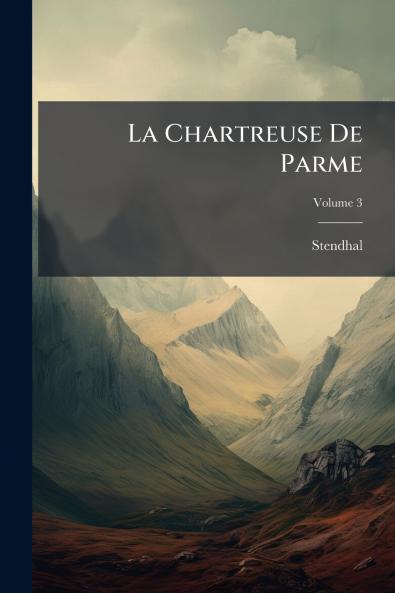



Paperback
₹2797
(All inclusive*)
Delivery Options
Please enter pincode to check delivery time.
*COD & Shipping Charges may apply on certain items.
Review final details at checkout.
Looking to place a bulk order? SUBMIT DETAILS
Delivery Options
Please enter pincode to check delivery time.
*COD & Shipping Charges may apply on certain items.
Review final details at checkout.
About The Book
Description
Author
<p><i>La Chartreuse de Parme</i> is a novel by Stendhal published in 1839. Set primarily in Italy it recounts the adventures of the young Italian nobleman Fabrice del Dongo from his birth in 1798 through his death. The novel is renowned for Stendhal's vivid depiction of post-Napoleonic Europe and the intricacies of Italian court life. </p><p>Fabrice's story begins with his youthful infatuation with Napoleon Bonaparte leading him to participate in the Battle of Waterloo. His subsequent adventures involve love affairs political intrigues and imprisonment all set against the backdrop of Parma's court. Key characters include the cunning and influential Countess Mosca who becomes Fabrice's protector and lover and Cl&eacute;lia Conti with whom Fabrice shares a profound but ultimately tragic love. The novel explores themes of love ambition and the search for meaning in a world of political corruption and social maneuvering. Stendhal's psychological insight and detailed character portrayals make La Chartreuse de Parme a cornerstone of French literature and a timeless exploration of the human condition.</p><p>This work has been selected by scholars as being culturally important and is part of the knowledge base of civilization as we know it. This work was reproduced from the original artifact and remains as true to the original work as possible. Therefore you will see the original copyright references library stamps (as most of these works have been housed in our most important libraries around the world) and other notations in the work.</p><p>This work is in the public domain in the United States of America and possibly other nations. Within the United States you may freely copy and distribute this work as no entity (individual or corporate) has a copyright on the body of the work.</p><p>As a reproduction of a historical artifact this work may contain missing or blurred pages poor pictures errant marks etc. Scholars believe and we concur that this work is important enough to be preserved reproduced and made generally available to the public. We appreciate your support of the preservation process and thank you for being an important part of keeping this knowledge alive and relevant.</p>

Piracy-free

Assured Quality

Secure Transactions

Fast Delivery

Sustainably Printed
Details
ISBN 13
9781142435547
Publication Date
-03-01-2010
Pages
-390
Weight
-553 grams
Dimensions
-156x234x20.74 mm
