

Italian


Paperback
₹13832
₹16717
17.26% OFF
(All inclusive*)
Delivery Options
Please enter pincode to check delivery time.
*COD & Shipping Charges may apply on certain items.
Review final details at checkout.
Looking to place a bulk order? SUBMIT DETAILS

Piracy-free

Assured Quality

Secure Transactions
About The Book
Description
Author
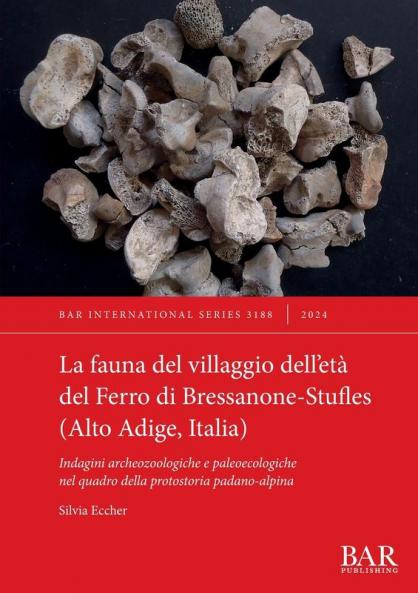
Il villaggio di Bressanone-Stufles (Alto Adige Italia) è stato oggetto di decennali indagini archeologiche che hanno confermato un'occupazione lungo tutta l'età del Ferro (VI-I sec. a.C.). L'ampio bacino di ossa animali analizzato a cui sono stati aggiunti i dati editi di studi precedenti ha permesso di formulare ipotesi sulla paleo-economia adottata dal villaggio e di stabilire un modello socio-economico dell'area retica.L'economia si basava primariamente sull'allevamento di bovini e ovicaprini al fine di sfruttarne i prodotti secondari (trazione latte riproduzione lana). Integrando approcci diversi archeologico e sociale si è tentato di stabilire le diverse destinazioni funzionali del villaggio e la presenza di gruppi sociali differenziati. L'analisi delle dimensioni degli animali si è rivelata utile per valutarne i cambiamenti in senso cronologico e geografico con le regioni confinanti. Ciò assieme alla scoperta di un reperto riferibile ad un asino ha aperto la strada ad ipotesi di legami con il mondo etrusco e mediterraneo.The village of Bressanone-Stufles (South Tyrol Italy) has been the subject of archaeological investigations for decades; the excavations have confirmed a continuity of occupation throughout the Iron Age (6th-1st c. BC). The large animal bone assemblage analysed in this study which includes published data from previous publication as well as unpublished materials made it possible to formulate hypotheses on the palaeo-economy adopted by the human group inhabiting this village and to establish a socio-economic model for the Rhaetian area.The economy at the site was primarily based on the rearing of cattle and sheep/goats to exploit their secondary products (traction milk reproduction wool). By adopting a social and archaeological approach a study of the possible functional uses of several areas of the village was carried out and an investigation of the presence of differentiated social groups was accomplished. A biometric comparison between the Bressanone-Stufles assemblage and assemblages from neighbouring regions was also conducted to understand whether livestock size differences through time could be identified. This analysis together with the discovery of a bone find attributed to a donkey points toward the likely existence of links with the Etruscan and Mediterranean worlds.
Piracy-free
Assured Quality
Secure Transactions
Delivery Options
Please enter pincode to check delivery time.
*COD & Shipping Charges may apply on certain items.
Review final details at checkout.
Details
ISBN 13
9781407361673
Publication Date
-27-09-2024
Pages
-378
Weight
-916 grams
Dimensions
-210x297x26.09 mm
