


English



₹9794
₹11452
14.48% OFF
(All inclusive*)
Hardback
Delivery Options
Please enter pincode to check delivery time.
*COD & Shipping Charges may apply on certain items.
Review final details at checkout.
Looking to place a bulk order? SUBMIT DETAILS
Delivery Options
Please enter pincode to check delivery time.
*COD & Shipping Charges may apply on certain items.
Review final details at checkout.
About The Book
Description
Author(s)
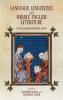
<b>Explores the intersections between two fundamental approaches to medieval literature shedding new light on texts ranging from The Canterbury Tales to Le Morte Darthur.</b><br><br><br>This volume identifies new methods and questions for language-based approaches to medieval English literature and literature-based approaches to Middle English by identifying philology as a cross-disciplinary practice shared by literary scholarship and linguistics. How can late medieval cultural perception and social participation be illuminated by literary language? What can language forms tell us about the experience of England's multilingual landscape? Contributors trace the relay between imaginative literature and an expanding Middle English lexicon the literary affordances of phonological and morphological features of Middle English and the way that medieval literature engaged with its multilingual sources. Essays also consider how social authority is negotiated in language with a particular focus on highly charged words such as corruption instability and treason and highly charged phenomena such as language contact allusion and genre experiments. Together they show that literary and linguistic approaches may inform each other to open new avenues of research on a wide variety of texts - including Chaucer's The Canterbury Tales and Troilus and Criseyde Malory's Le Morte Darthur Gower's Confessio Amantis Lydgate's Reson and sensuallyte and Hoccleve's Regement of Princes. The volume thus pays tribute to the influence on both fields of distinguished medievalist Karla Taylor.

Piracy-free

Assured Quality

Secure Transactions

Fast Delivery

Sustainably Printed
Details
ISBN 13
9781843847397
Publication Date
-18-03-2025
Pages
-272
Weight
-483 grams
Dimensions
-156x234x15.88 mm
