



₹10633
₹14358
25.94% OFF
(All inclusive*)
Paperback
Delivery Options
Please enter pincode to check delivery time.
*COD & Shipping Charges may apply on certain items.
Review final details at checkout.
Looking to place a bulk order? SUBMIT DETAILS
Delivery Options
Please enter pincode to check delivery time.
*COD & Shipping Charges may apply on certain items.
Review final details at checkout.
About The Book
Description
Author
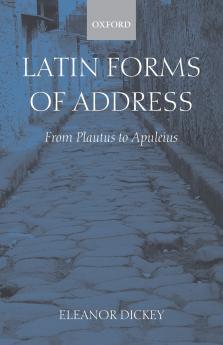
How did Romans address their children their parents their slaves and their patrons? When one Roman called another ''dearest'' ''master'' ''brother'' ''human being'' ''executioner'' or ''soft little cheese'' what did these terms really mean and why? This book brings to bear on such questions a corpus of 15441 addresses spanning four centuries drawn from literary prose poetry letters inscriptions ostraca and papyri and analysed during recent work in sociolinguistics. The results offer new insights into Roman culture and shed a fresh light on the interpretation of numerous passages in literature. A glossary of the 500 most common addresses and quick-reference tables explaining the rules of usage make this book a valuable resource for Latin teachers and all active users of the language while the evidence for the investigations behind these conclusions will fascinate scholars and laymen alike. Original jargon-free and highly readable this work will be enjoyed even by thosewith no prior knowledge of Latin.

Piracy-free

Assured Quality

Secure Transactions

Fast Delivery

Sustainably Printed
Details
ISBN 13
9780199239054
Publication Date
-06-12-2007
Pages
-428
Weight
-501 grams
Dimensions
-140x216x24.19 mm
