

English


Hardback
₹11435
₹13522
15.43% OFF
(All inclusive*)
Delivery Options
Please enter pincode to check delivery time.
*COD & Shipping Charges may apply on certain items.
Review final details at checkout.
Looking to place a bulk order? SUBMIT DETAILS
Delivery Options
Please enter pincode to check delivery time.
*COD & Shipping Charges may apply on certain items.
Review final details at checkout.
About The Book
Description
Author(s)
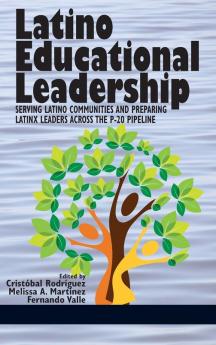
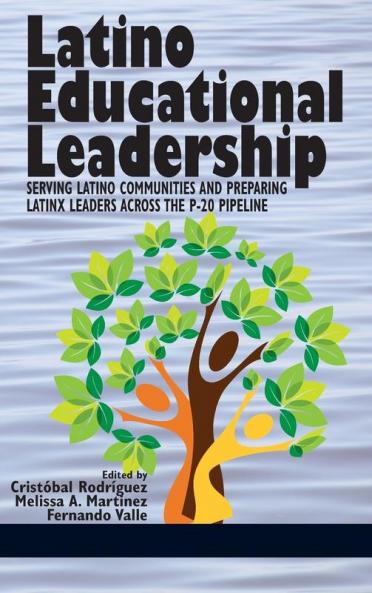
<p><strong>Latino Educational Leadership </strong>acknowledges the unique preparation and support for both Latinx educational leaders and Latino communities needed throughout the education and policy pipeline. While leadership in communities exists for educational purposes this effort focuses on the institutional aspect of <em>Latino Educational Leadership </em>across K-12 schools and university settings. The purpose of this book is to create a greater collaborative focus on Latino Educational Leadership by inviting scholarly contributions and insights from both established and up-and-coming scholars. Latino Educational Leadership also advocates for the preparation of all leaders as well as the preparation of Latinx educational leaders to serve Latino communities.</p><p>Our impetus on <em>Latino Educational Leadership </em>primarily stems from the changing demographics of our country. As of Fall 2017 Latinx student enrollment in K-12 schools reached an all-time high with Latinxs comprising 26.8% of the nation&rsquo;s public school enrollment. Postsecondary level Latinx student enrollment has also improved; rising from 25% in 2005 to 37% in 2015. Given this growth particularly at the K-12 level there has been an increasing urgency to prepare and support more Latinx educational leaders. Their rich cultural and linguistic connections to communities help them more readily understand and meet the needs of Latino students and families.</p><p>Aside from enrollment growth Latinxs have made record strides in postsecondary attainment; between 2003-04 and 2013-14 bachelor&#39;s degrees more than doubled from 94644 to 202412 master&#39;s degrees conferred rose from 29806 to 55965 and doctoral degrees rose from 5 795 to 10665. Despite such promising gains concern has not waned over how to best address the challenges this diverse student population continues to face in accessing persisting and matriculating across the P-20 Pipeline. There is still work to be done as only 11% of all bachelor&rsquo;s degrees 9% of all master&rsquo;s degrees and 7% of all doctoral degrees were awarded to Latinxs in 2013-14. In particular there is increasing urgency to address how higher education institutions can better prepare develop and retain Latinx leaders and scholars who will serve and meet the needs of Latinx college students to ensure their academic success. Thus the purpose of this book is to advance the knowledge related to serving Latino communities and preparing Latinx leaders.</p><p>&nbsp;</p>

Piracy-free

Assured Quality

Secure Transactions

Fast Delivery

Sustainably Printed
Details
ISBN 13
9781641133562
Publication Date
-05-09-2018
Pages
-236
Weight
-434 grams
Dimensions
-156x234x14.29 mm
