


English



Hardback
₹14871
₹19833
25.02% OFF
(All inclusive*)
Delivery Options
Please enter pincode to check delivery time.
*COD & Shipping Charges may apply on certain items.
Review final details at checkout.
Looking to place a bulk order? SUBMIT DETAILS
Delivery Options
Please enter pincode to check delivery time.
*COD & Shipping Charges may apply on certain items.
Review final details at checkout.
About The Book
Description
Author(s)
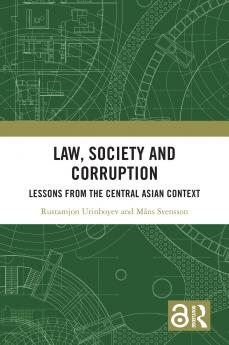
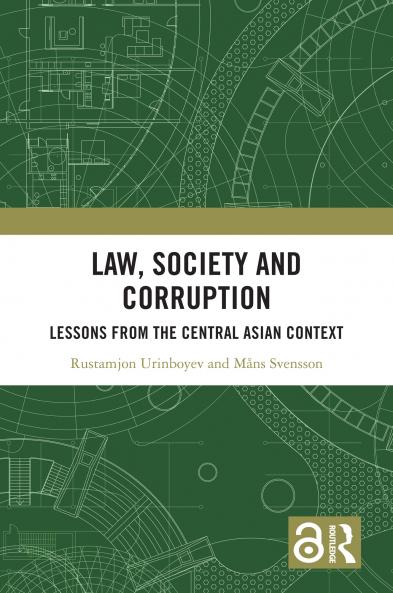
<p>This book presents new socio-legal perspectives and insights on the social life of corruption and anticorruption in authoritarian regimes.</p><p>This book takes up the case of Uzbekistan—an authoritarian regime in Central Asia and one of the most corrupt countries in the world according to Transparency International’s Corruption Perceptions Index—and examines the corruption that developed in a tightly closed authoritarian regime permeated by a large-scale shadow economy a weak rule of law and a collectivist legal culture. Building on socio-legal frameworks of legal compliance living law and legal pluralism the central argument of the book is that the roles meanings and logics of corruption are fluid and depend on a myriad of structural variables and contextual and situational factors.</p><p>This book will be of value to researchers academics and students in the fields of sociology of law legal anthropology and Central Asian studies especially those with an interest in the intersection of law society and corruption in authoritarian regime contexts.</p><p>The Open Access version of this book available at <a href=http://www.taylorfrancis.com>www.taylorfrancis.com</a> has been made available under a Creative Commons Attribution (CC-BY) 4.0 International license.</p>

Piracy-free

Assured Quality

Secure Transactions

Fast Delivery

Sustainably Printed
Details
ISBN 13
9781138592797
Publication Date
-04-07-2024
Pages
-148
Weight
-313 grams
Dimensions
-156x234x9.6 mm
