



This Book is Out of Stock!
English



₹1753
₹1950
10.08% OFF
(All inclusive*)
Paperback
Delivery Options
*COD & Shipping Charges may apply on certain items.
Review final details at checkout.
Looking to place a bulk order? SUBMIT DETAILS
*COD & Shipping Charges may apply on certain items.
Review final details at checkout.
₹1753
₹1950
10% OFF
Paperback
Out Of Stock
All inclusive*
About The Book
Description
Author
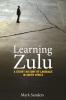
<p><i>Why are you learning Zulu?</i> When Mark Sanders began studying the language he was often asked this question. In <i>Learning Zulu</i> Sanders places his own endeavors within a wider context to uncover how in the past 150 years of South African history Zulu became a battleground for issues of property possession and deprivation. Sanders combines elements of analysis and memoir to explore a complex cultural history. <p/>Perceiving that colonial learners of Zulu saw themselves as repairing harm done to Africans by Europeans Sanders reveals deeper motives at work in the development of Zulu-language learning--from the emergence of the pidgin Fanagalo among missionaries and traders in the nineteenth century to widespread efforts in the twentieth and twenty-first centuries to teach a correct form of Zulu. Sanders looks at the white appropriation of Zulu language music and dance in South African culture and at the association of Zulu with a martial masculinity. In exploring how Zulu has come to represent what is most properly and powerfully African Sanders examines differences in English- and Zulu-language press coverage of an important trial as well as the role of linguistic purism in xenophobic violence in South Africa. <p/>Through one person's efforts to learn the Zulu language <i>Learning Zulu </i>explores how a language's history and politics influence all individuals in a multilingual society.</p>

Piracy-free

Assured Quality

Secure Transactions

Fast Delivery

Sustainably Printed
Details
ISBN 13
9780691191461
Publication Date
-04-06-2019
Pages
-208
Weight
-331 grams
Dimensions
-156x235x12.77 mm
