


This Book is Out of Stock!
English



Hardback
₹10236
(All inclusive*)
Delivery Options
*COD & Shipping Charges may apply on certain items.
Review final details at checkout.
Looking to place a bulk order? SUBMIT DETAILS
*COD & Shipping Charges may apply on certain items.
Review final details at checkout.
₹10236
Out Of Stock
All inclusive*
About The Book
Description
Author(s)
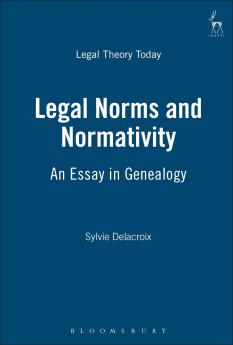
This book offers a ''genealogical'' explanation of law''s normativity. The term ''genealogical'' conveys a commitment to a non-metaphysical type of enquiry. While it explains how law as a normative phenomenon comes about it does not seek to ground law''s normativity in anything but the context of social interaction giving rise to it. Legal normativity is brought about on a daily basis. Whether in revolutionary circumstances or in the quotidian need for judges lawmakers or citizens to balance law''s demands with those of morality or prudence our ability to bind ourselves through law ultimately depends on our capacity to articulate a better way of living together and to commit ourselves to it. These efforts of assessment and articulation depend in turn on our conception of normative agency. Assert the need to trace the truth of ethical judgments to some independent moral ''facts'' conditioning their objectivity and you will get a different understanding of what it is we are doing when we dispute law''s authority in the name of moral values. Tracing the truth of moral judgements back to our own social practices not only affects the nature of disagreement; it also dramatically increases our responsibility when as lawmakers judges or citizens we ''take the law into our own hands'' and confront it with our moral expectations.

Piracy-free

Assured Quality

Secure Transactions

Fast Delivery

Sustainably Printed
Details
ISBN 13
9781841134550
Publication Date
-18-03-2026
Pages
-244
Weight
-444 grams
Dimensions
-155.96x233.93x14.54 mm
