


English


₹15269
₹17497
12.73% OFF
(All inclusive*)
Paperback
Delivery Options
Please enter pincode to check delivery time.
*COD & Shipping Charges may apply on certain items.
Review final details at checkout.
Looking to place a bulk order? SUBMIT DETAILS
Delivery Options
Please enter pincode to check delivery time.
*COD & Shipping Charges may apply on certain items.
Review final details at checkout.
About The Book
Description
Author(s)
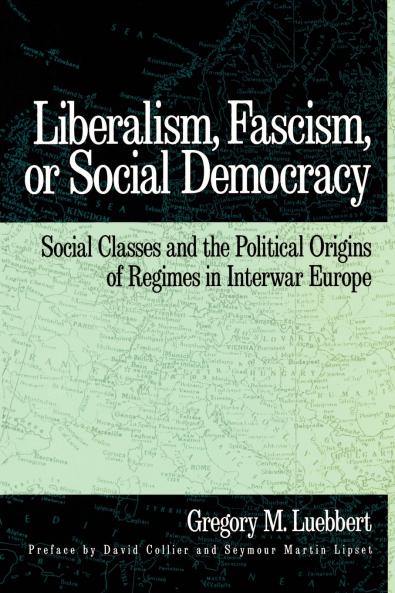
This work provides a sweeping historical analysis of the political development of Western Europe in the late 19th and early 20th century. The author argues that the evolution of most European nations into liberal democracies social democracies or facist regimes was attributable to a discrete set of social and class alliances within individual nations. In Britain France and Switzerland countries with a unified middle class liberal forces established political hegemony before World War I. By co-opting considerable sections of the working class with reforms that weakened union movements liberals essentially excluded the fragmented working class from the political process remaining in power throughout the inter-war period. In countries with a strong cohesive working class and a fractured middle class Luebbert points out a liberal solution was impossible. In Norway Sweden Denmark and Czechoslovakia political coalitions of social democrats and family peasantry emerged as a result of World War I resulting in social democracies. In Spain Italy and Germany on the other hand the urban middle class united with a peasantry hostile to socialism to facilitate the rise of fascism.

Piracy-free

Assured Quality

Secure Transactions

Fast Delivery

Sustainably Printed
Details
ISBN 13
9780195066111
Publication Date
-01-03-1991
Pages
-432
Weight
-582 grams
Dimensions
-152x229x24.41 mm
