


English


Hardback
₹1248
₹2156
42.12% OFF
(All inclusive*)
Delivery Options
Please enter pincode to check delivery time.
*COD & Shipping Charges may apply on certain items.
Review final details at checkout.
Looking to place a bulk order? SUBMIT DETAILS
Delivery Options
Please enter pincode to check delivery time.
*COD & Shipping Charges may apply on certain items.
Review final details at checkout.
About The Book
Description
Author
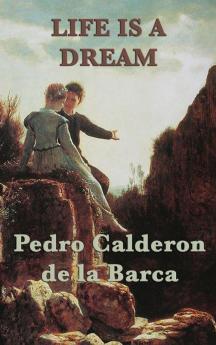
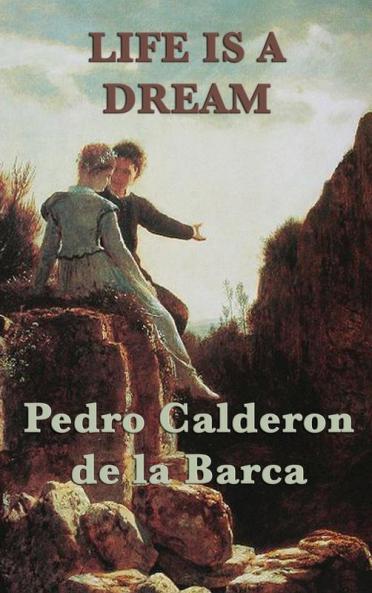
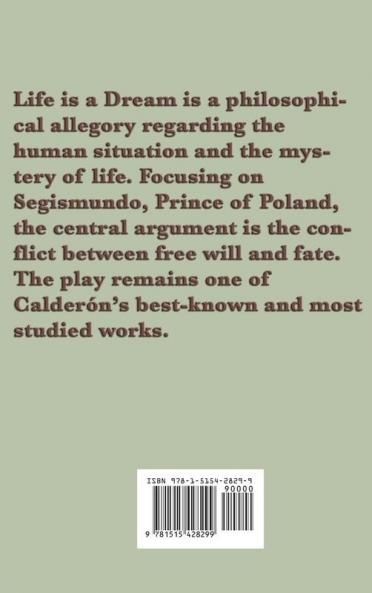
<p><strong>A central work of Spanish drama <em>Life Is a Dream</em> examines the nature of reality free will and human responsibility through a structured philosophical narrative.</strong></p><p>The play follows Segismundo a prince raised in confinement and brought suddenly into a position of power. Confronted with questions of identity and authority he must navigate the tension between impulse and restraint as well as the uncertainty of what is real and what is illusion. The narrative unfolds through a sequence of controlled dramatic situations each contributing to a broader exploration of perception and conduct.</p><p>Calderón's work combines elements of court drama with philosophical inquiry presenting themes of fate moral choice and the discipline of thought. The structure of the play reflects the traditions of Spanish Golden Age theatre while its central concerns extend beyond its immediate historical context. As a result <em>Life Is a Dream</em> remains a significant work within both dramatic literature and the study of philosophical themes in narrative form.</p>

Piracy-free

Assured Quality

Secure Transactions

Fast Delivery

Sustainably Printed
Details
ISBN 13
9781515428299
Publication Date
-03-04-2018
Pages
-84
Weight
-215 grams
Dimensions
-152x229x6.5 mm
