


English




Paperback
₹6046
(All inclusive*)
Delivery Options
Please enter pincode to check delivery time.
*COD & Shipping Charges may apply on certain items.
Review final details at checkout.
Looking to place a bulk order? SUBMIT DETAILS

Piracy-free

Assured Quality

Secure Transactions
About The Book
Description
Author
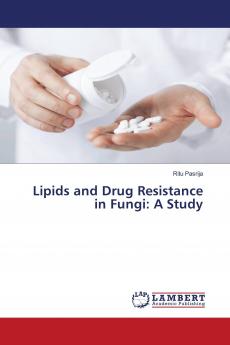
Candida albicans is an opportunistic diploid fungus that causes infection in immunocompromised and debilitated patients. Wide spread and prolonged usage of azoles in recent years has led to the rapid development of the phenomenon of azole resistance which poses a major threat to antifungal therapy. Various mechanisms contribute towards the development of resistance in Candida such as overexpression of pumps encoded by genes belonging to ATP-Binding Cassette (ABC) and Major Facilitator Superfamilies of transporters (MFS) and/or mutations in the target enzyme of azoles etc. Based on several studies a close interaction between membrane lipids and drug extrusion pump proteins has been realized. It has been shown that the action of antifungals is modulated by subtle modification of the membrane lipid composition.
Piracy-free
Assured Quality
Secure Transactions
Delivery Options
Please enter pincode to check delivery time.
*COD & Shipping Charges may apply on certain items.
Review final details at checkout.
Details
ISBN 13
9783659855870
Publication Date
-13-05-2016
Pages
-148
Weight
-210 grams
Dimensions
-150x220x8.2 mm
