


English



Paperback
₹1689
₹1853
8.85% OFF
(All inclusive*)
Delivery Options
Please enter pincode to check delivery time.
*COD & Shipping Charges may apply on certain items.
Review final details at checkout.
Looking to place a bulk order? SUBMIT DETAILS
Delivery Options
Please enter pincode to check delivery time.
*COD & Shipping Charges may apply on certain items.
Review final details at checkout.
About The Book
Description
Author
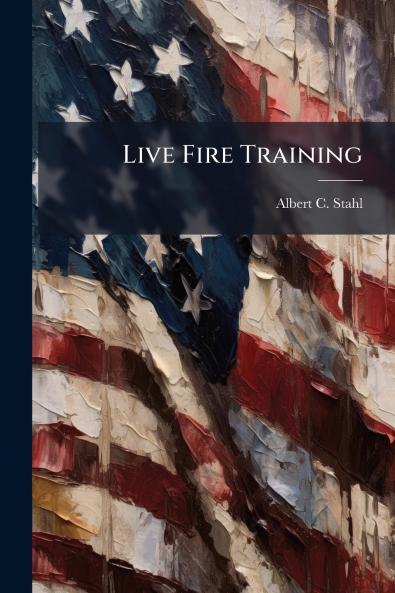
<p>While it appears that the role of the U.S. Army is changing from exclusively fighting and winning the nation's wars to becoming the force provider for numerous support and stability operations the potential to become entangled in low intensity close combat has increased dramatically as global instability mounts. The senior leadership of the Army is moving to adopt revolutionary technological advances which arguably cast doubt on whether future close combat is even necessary. Victory is presumed to be achieved by the massing of combined arms synergy from stand-off ranges. However history is full of examples where the most technologically advanced combatant has lost to the combatant that is the best trained and that possesses the greatest level of cohesion unity and espirit de corps. All the advantages mentioned are the by-products of tough realistic maneuver live-fire training at the unit level. The monograph examines the question whether the United States (U.S.) Army's light infantry maneuver live-fire training is sufficient to warrant a first fight victory. Live-fire training currently mandated by the Training and Doctrine Command (TRADOC) is identified along with the amount of ammunition allocated to light infantry battalions for such training. Also discussed in depth are the by-products of maneuver live-fire training and the leadership training that should provide the Army with intuitive confident leaders into 2010 and beyond. Finally discussion will describe current trends at the Joint Readiness Training Center in both force-on-force and maneuver live-fires. The monograph concludes that currently mandated live-fire training and ammunition allocations are adequate for the U.S. Army's light infantry to be assured a first fight victory. However recommendations are made on changing Army training methodology which at present is extremely dogmatic and stifles initiative and hinders the ability to properly fire and maneuver infantrymen and their supporting</p><p>This work has been selected by scholars as being culturally important and is part of the knowledge base of civilization as we know it. This work was reproduced from the original artifact and remains as true to the original work as possible. Therefore you will see the original copyright references library stamps (as most of these works have been housed in our most important libraries around the world) and other notations in the work.</p><p>This work is in the public domain in the United States of America and possibly other nations. Within the United States you may freely copy and distribute this work as no entity (individual or corporate) has a copyright on the body of the work.</p><p>As a reproduction of a historical artifact this work may contain missing or blurred pages poor pictures errant marks etc. Scholars believe and we concur that this work is important enough to be preserved reproduced and made generally available to the public. We appreciate your support of the preservation process and thank you for being an important part of keeping this knowledge alive and relevant.</p>

Piracy-free

Assured Quality

Secure Transactions

Fast Delivery

Sustainably Printed
Details
ISBN 13
9781288287840
Publication Date
-12-11-2012
Pages
-64
Weight
-106 grams
Dimensions
-156x234x3.47 mm
