


French



₹2279
₹2509
9.17% OFF
(All inclusive*)
Paperback
Delivery Options
Please enter pincode to check delivery time.
*COD & Shipping Charges may apply on certain items.
Review final details at checkout.
Looking to place a bulk order? SUBMIT DETAILS
Delivery Options
Please enter pincode to check delivery time.
*COD & Shipping Charges may apply on certain items.
Review final details at checkout.
About The Book
Description
Author
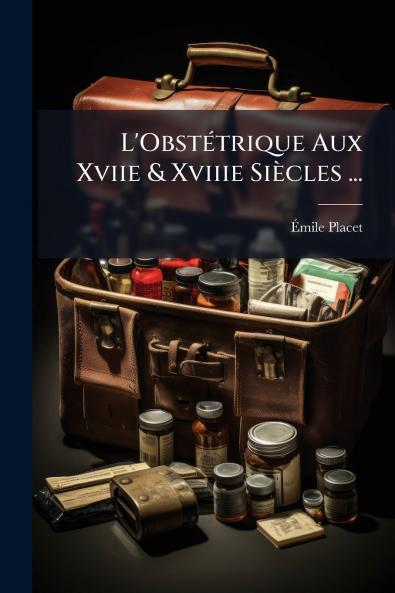
<p><i>L'Obst&eacute;trique Aux XVIIe & XVIIIe Si&egrave;cles</i> offre une plong&eacute;e fascinante dans l'histoire de l'obst&eacute;trique et de la gyn&eacute;cologie en France. &Eacute;crit par &Eacute;mile Placet et publi&eacute; en 1892 cet ouvrage explore les pratiques m&eacute;dicales les th&eacute;ories et les &eacute;volutions qui ont marqu&eacute; ces deux si&egrave;cles cruciaux. &Agrave; travers une analyse d&eacute;taill&eacute;e Placet met en lumi&egrave;re les d&eacute;fis rencontr&eacute;s par les m&eacute;decins et les sages-femmes ainsi que les progr&egrave;s r&eacute;alis&eacute;s dans la compr&eacute;hension de la grossesse de l'accouchement et des soins postnatals. </p><p>Ce livre est une ressource pr&eacute;cieuse pour les historiens de la m&eacute;decine les professionnels de la sant&eacute; et tous ceux qui s'int&eacute;ressent &agrave; l'&eacute;volution des pratiques m&eacute;dicales et &agrave; l'histoire des femmes. Il offre un aperçu unique de la vie et des soins obst&eacute;triques &agrave; une &eacute;poque o&ugrave; la science et la tradition se rencontraient.</p><p>This work has been selected by scholars as being culturally important and is part of the knowledge base of civilization as we know it. This work was reproduced from the original artifact and remains as true to the original work as possible. Therefore you will see the original copyright references library stamps (as most of these works have been housed in our most important libraries around the world) and other notations in the work.</p><p>This work is in the public domain in the United States of America and possibly other nations. Within the United States you may freely copy and distribute this work as no entity (individual or corporate) has a copyright on the body of the work.</p><p>As a reproduction of a historical artifact this work may contain missing or blurred pages poor pictures errant marks etc. Scholars believe and we concur that this work is important enough to be preserved reproduced and made generally available to the public. We appreciate your support of the preservation process and thank you for being an important part of keeping this knowledge alive and relevant.</p>

Piracy-free

Assured Quality

Secure Transactions

Fast Delivery

Sustainably Printed
Details
ISBN 13
9781141450909
Publication Date
-01-01-2010
Pages
-220
Weight
-320 grams
Dimensions
-156x234x12.01 mm
