


English



Paperback
₹4714
₹5687
17.11% OFF
(All inclusive*)
Delivery Options
Please enter pincode to check delivery time.
*COD & Shipping Charges may apply on certain items.
Review final details at checkout.
Looking to place a bulk order? SUBMIT DETAILS
Delivery Options
Please enter pincode to check delivery time.
*COD & Shipping Charges may apply on certain items.
Review final details at checkout.
About The Book
Description
Author
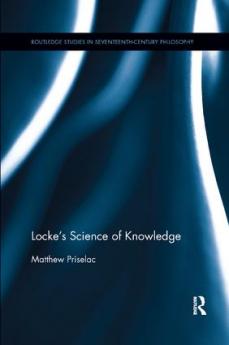
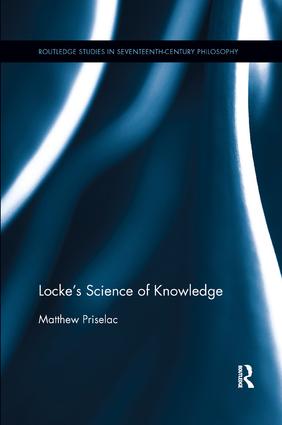
<p>John Locke’s <i>An Essay Concerning Human Understanding</i> begins with a clear statement of an epistemological goal: to explain the limits of human knowledge opinion and ignorance. The actual text of the <i>Essay</i> in stark contrast takes a long and seemingly meandering path before returning to that goal at the <i>Essay</i>’s end—one with many detours through questions in philosophy of mind metaphysics and philosophy of language. Over time Locke scholarship has come to focus on Locke’s contributions to these parts of philosophy. In <i>Locke’s Science of Knowledge</i> Priselac refocuses on the <i>Essay</i>’s epistemological thread arguing that the <i>Essay</i> is unified from beginning to end around its compositional theory of ideas and the active role Locke gives the mind in constructing its thoughts. To support the plausibility and demonstrate the value of this interpretation Priselac argues that—contrary to its reputation as being at best sloppy and at worst outright inconsistent—Locke’s discussion of skepticism and account of knowledge of the external world fits neatly within the Essay’s epistemology.</p>

Piracy-free

Assured Quality

Secure Transactions

Fast Delivery

Sustainably Printed
Details
ISBN 13
9780367258429
Publication Date
-05-03-2019
Pages
-248
Weight
-341 grams
Dimensions
-152x229x13.34 mm
