

English


Paperback
₹4195
(All inclusive*)
Delivery Options
Please enter pincode to check delivery time.
*COD & Shipping Charges may apply on certain items.
Review final details at checkout.
Looking to place a bulk order? SUBMIT DETAILS
Delivery Options
Please enter pincode to check delivery time.
*COD & Shipping Charges may apply on certain items.
Review final details at checkout.
About The Book
Description
Author
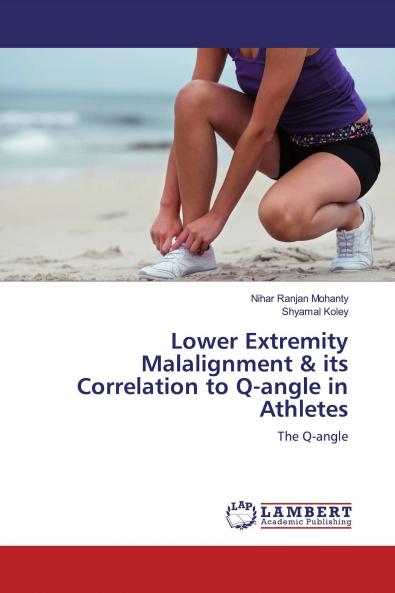
Athletes may be professional or amateurs. Most professional athletes have particularly well-developed physique obtained by extensive physical training and strict exercise accompanied by a strict dietary regimen. Alignment of the hip knee and ankle is thought to play a key role in the load distribution at the knee and thus the tension placed on the capsuloligamentous structures. Among these lower extremity alignment variables the Q angle has been frequently studied which is defined as the angle formed by a line from the anterior superior iliac spine to the patella center and a line from the patella centre to the tibial tuberosity. As Q angle represent the direction of the quadriceps muscle force vector in the frontal plane excessive angulation is thought to predispose individuals to injuries caused by abnormal quadriceps forces acting at the knee and patellofemoral joints. Although the Q angle has been suggested as risk factors for injuries retrospective risk factors studies have failed to confirm this relationship. This book will clear these doubts in a simplified way.

Piracy-free

Assured Quality

Secure Transactions

Fast Delivery

Sustainably Printed
Details
ISBN 13
9786200281845
Publication Date
-22-08-2019
Pages
-64
Weight
-96 grams
Dimensions
-150x220x3.89 mm
