

English



₹7033
₹7487
6.06% OFF
(All inclusive*)
Hardback
Delivery Options
Please enter pincode to check delivery time.
*COD & Shipping Charges may apply on certain items.
Review final details at checkout.
Looking to place a bulk order? SUBMIT DETAILS
Delivery Options
Please enter pincode to check delivery time.
*COD & Shipping Charges may apply on certain items.
Review final details at checkout.
About The Book
Description
Author
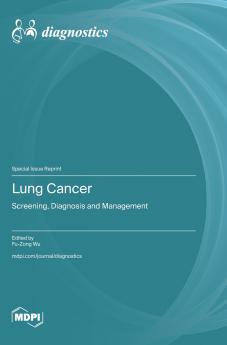
<p>Lung cancer remains a major global health challenge representing the leading cause of cancer-related mortality worldwide. Despite significant progress in treatment the prognosis for many patients remains poor due to the high proportion of cases diagnosed at an advanced stage. The articles in this issue span a range of disciplines highlighting recent advances in low-dose computed tomography (LDCT) screening radiomics artificial intelligence-assisted diagnostics and biomarker-guided tools along with evolving therapies such as immunotherapy and targeted treatments. Special attention is given to risk-based population-tailored screening strategies with a particular focus on non-smokers and underserved high-risk groups. As a diagnostic specialist based in Kaohsiung Taiwan I have interpreted over 10000 LDCT scans and have seen firsthand the vital role of early detection in improving patient outcomes. These experiences reinforce the value of integrating clinical expertise with technological innovation in real-world practice. This Special Issue reflects the collaborative efforts of clinicians researchers and public health experts who are dedicated to reducing the global burden of lung cancer. I would like to express my gratitude to the contributing authors and to the editorial and peer-review teams for their commitment to scientific rigor. It is my hope that the insights shared here will inform clinical practice guide policy and inspire future research toward better care for patients at risk of lung cancer.</p>

Piracy-free

Assured Quality

Secure Transactions

Fast Delivery

Sustainably Printed
Details
ISBN 13
9783725844838
Publication Date
-11-07-2025
Pages
-170
Weight
-390 grams
Dimensions
-170x244x14.29 mm
