

English


Paperback
₹3842
(All inclusive*)
Delivery Options
Please enter pincode to check delivery time.
*COD & Shipping Charges may apply on certain items.
Review final details at checkout.
Looking to place a bulk order? SUBMIT DETAILS
Delivery Options
Please enter pincode to check delivery time.
*COD & Shipping Charges may apply on certain items.
Review final details at checkout.
About The Book
Description
Author
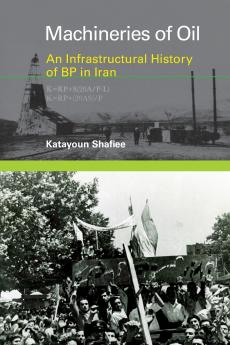
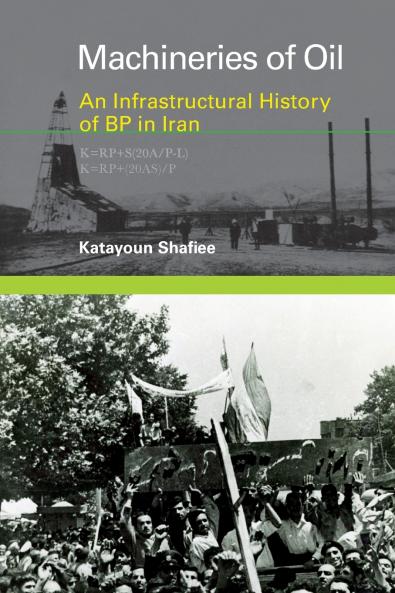
<b>The emergence of the international oil corporation as a political actor in the twentieth century seen in BP's infrastructure and information arrangements in Iran.</b> <p/>In the early twentieth century international oil corporations emerged as a new kind of political actor. The development of the world oil industry argues Katayoun Shafiee was one of the era's largest political projects of techno-economic development. In this book Shafiee maps the machinery of oil operations in the Anglo-Iranian oil industry between 1901 and 1954 tracking the organizational work involved in moving oil through a variety of technical legal scientific and administrative networks. She shows that in a series of disagreements the British-controlled Anglo-Iranian Oil Company (AIOC which later became BP) relied on various forms of information management to transform political disputes into techno-economic calculation guaranteeing the company complete control over profits labor and production regimes. She argues that the building of alliances and connections that constituted Anglo-Iranian oil's infrastructure reconfigured local politics of oil regions and examines how these arrangements in turn shaped the emergence of both nation-state and transnational oil corporation. <p/>Drawing on her extensive archival and field research in Iran Shafiee investigates the surprising ways in which nature technology and politics came together in battles over mineral rights; standardizing petroleum expertise; formulas for calculating profits production rates and labor; the Persianization of employees; nationalism and oil nationalization; and the long-distance machinery of an international corporation. Her account shows that the politics of oil cannot be understood in isolation from its technical dimensions. <p/>The open access edition of this book was made possible by generous funding from Knowledge Unlatched.

Piracy-free

Assured Quality

Secure Transactions

Fast Delivery

Sustainably Printed
Details
ISBN 13
9780262548854
Publication Date
-15-08-2023
Pages
-358
Weight
-485 grams
Dimensions
-152x229x20.28 mm
