

English


Hardback
₹12966
₹18221
28.84% OFF
(All inclusive*)
Delivery Options
Please enter pincode to check delivery time.
*COD & Shipping Charges may apply on certain items.
Review final details at checkout.
Looking to place a bulk order? SUBMIT DETAILS

Piracy-free

Assured Quality

Secure Transactions
About The Book
Description
Author
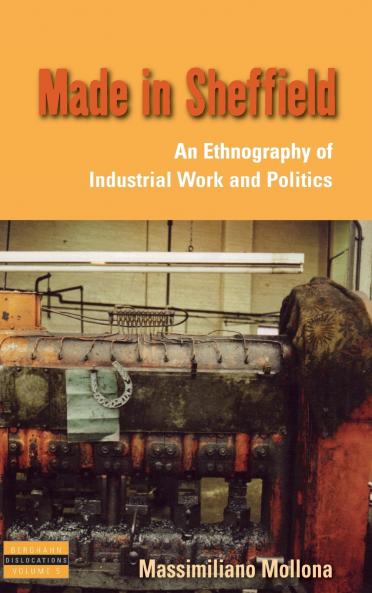
<p> In 1900 Sheffield was the tenth largest city in the world. Cutlery made in Sheffield was used across the globe and the city built armored plate for the navy in the run-up to the First World War. Today however Sheffield's derelict Victorian shop floors and industrial buildings are hidden behind new leisure developments and shopping centers.</p><p> Based on an extended period of research in two local steel factories this book combines a lively descriptive account with a wide-ranging critique of post-industrial capitalism. Its central argument is that recent government attempts to engineer Britain's transition to a post-industrial and classless society have instead created volatile post-industrial spaces marked by informal labor industrial sweatshops and levels of risk and deprivation that divide citizens along lines of gender age and class. The author discovers a link between production and reproduction and demonstrates the centrality of kinship relations child and female labor and intra-household exchanges to the economic process of de-industrialization. Paradoxically government policies have reinvigorated working-class militancy spawned local industrial clusters and re-embedded the economy in the spatial and social structure of the neighborhood.</p>
Piracy-free
Assured Quality
Secure Transactions
Delivery Options
Please enter pincode to check delivery time.
*COD & Shipping Charges may apply on certain items.
Review final details at checkout.
Details
ISBN 13
9781845455514
Publication Date
-01-03-2009
Pages
-214
Weight
-385 grams
Dimensions
-152x229x12.7 mm
