


English



₹721
(All inclusive*)
Paperback
Delivery Options
Please enter pincode to check delivery time.
*COD & Shipping Charges may apply on certain items.
Review final details at checkout.
Looking to place a bulk order? SUBMIT DETAILS
Delivery Options
Please enter pincode to check delivery time.
*COD & Shipping Charges may apply on certain items.
Review final details at checkout.
About The Book
Description
Author
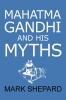
<p>&quot;All my actions have their source in my inalienable love of humankind.&quot; -- Gandhi<br />&nbsp;<br />Mahatma Gandhi is one of the least understood figures of all time -- even among his admirers. In this Annual Gandhi Lecture for the International Association of Gandhian Studies Mark Shepard tackles some persistently wrong-headed views of Gandhi offering us a more accurate picture of the man and his nonviolence.<br />&nbsp;<br />////////////////////////////////////////////////<br />&nbsp;<br />&quot;A model of Gandhian journalism. . . . [Shepard] has put his finger on seemingly all of the popular (and some less common) misconceptions of both Gandhi and his philosophy including some particularly important ones. . . . This book takes little space to cover its topic concisely and well. It would be [some] of the most valuable pages many people could read about Gandhi.&quot; -- Global Conscience July-Sept. 1990<br />&nbsp;<br />////////////////////////////////////////////////<br />&nbsp;<br />Mark Shepard is the author of &quot;Mahatma Gandhi and His Myths&quot; &quot;The Community of the Ark&quot; and &quot;Gandhi Today&quot; called by the American Library Association&#39;s Booklist &quot;a masterpiece of committed reporting.&quot; His writings on social alternatives have appeared in over 30 publications in the United States Canada England Norway Germany the Netherlands Switzerland Japan and India.<br />&nbsp;<br />////////////////////////////////////////////////<br />&nbsp;<br />SAMPLE<br />&nbsp;<br />I suspect that most of the myths and misconceptions surrounding Gandhi have to do with nonviolence. For instance it&#39;s surprising how many people still have the idea that nonviolent action is passive.<br />&nbsp;<br />It&#39;s important for us to be clear about this: There is nothing passive about Gandhian nonviolent action.<br />&nbsp;<br />I&#39;m afraid Gandhi himself helped create this confusion by referring to his method at first as &quot;passive resistance&quot; because it was in some ways like techniques bearing that label. But he soon changed his mind and rejected the term.<br />&nbsp;<br />Gandhi&#39;s nonviolent action was not an evasive strategy nor a defensive one. Gandhi was always on the offensive. He believed in confronting his opponents aggressively in such a way that they could not avoid dealing with him.<br />&nbsp;<br />But wasn&#39;t Gandhi&#39;s nonviolent action designed to avoid violence? Yes and no. Gandhi steadfastly avoided violence toward his opponents. He did not avoid violence toward himself or his followers.<br />&nbsp;<br />Gandhi said that the nonviolent activist like any soldier had to be ready to die for the cause. And in fact during India&#39;s struggle for independence hundreds of Indians were killed by the British.<br />&nbsp;<br />The difference was that the nonviolent activist while willing to die was never willing to kill.<br />&nbsp;<br />Gandhi pointed out three possible responses to oppression and injustice. One he described as the coward&#39;s way: to accept the wrong or run away from it. The second option was to stand and fight by force of arms. Gandhi said this was better than acceptance or running away.<br />&nbsp;<br />But the third way he said was best of all and required the most courage: to stand and fight solely by nonviolent means.<br />&nbsp;</p><p>&nbsp;</p>

Piracy-free

Assured Quality

Secure Transactions

Fast Delivery

Sustainably Printed
Details
ISBN 13
9781620359099
Publication Date
-15-10-2024
Pages
-50
Weight
-82 grams
Dimensions
-152x229x3.04 mm
