




This Book is Out of Stock!

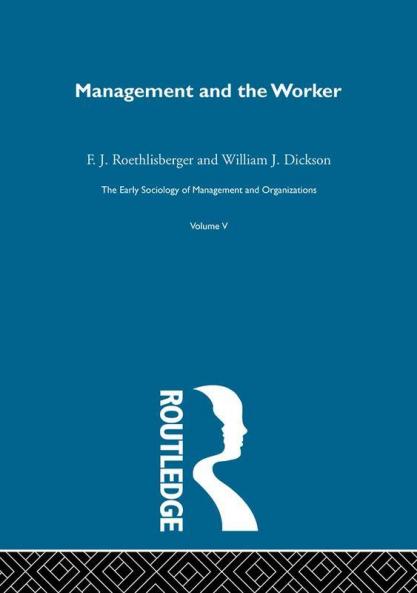




Hardback
₹26275
(All inclusive*)
Delivery Options
*COD & Shipping Charges may apply on certain items.
Review final details at checkout.
Looking to place a bulk order? SUBMIT DETAILS
*COD & Shipping Charges may apply on certain items.
Review final details at checkout.
₹26275
Out Of Stock
All inclusive*
About The Book
Description
Author
This is the official account of the experiments carried out at the Hawthorne Works of the Eastern Electric Company in Chicago. These were divided into test room studies, interviewing studies and observational studies. The test room studies were experiments into what variables in a workplace environment might affect worker fatigue. The findings of these tests led to extensive interviewing on the attitudes of the workers. The final phase of the Hawthorne experiment focused on social factors, using techniques of cultural anthropology to observe small working groups. The results of these experiments profoundly influenced the Human Relations movement. <p><strong>Part I </strong><br><br> I. Introduction<br> II. Planning the Relay Assembly Test Room<br> III. Experiment with Rest Pauses<br> IV. Experiment with Shorter Working Days and Weeks<br> V. Testing the Fatigue and Monotony Hypotheses<br> VI. Testing the Effects of Wage Incentive; the Second Relay Assembly Group and the Mica Splitting Test Room<br> VII. The Test Room Operators; their Individual Differences and Interpersonal Relations<br> VIII. The Relay Assembly Test Room Supervision<br><br><strong>Part II</strong><br><br> IX. The Growth and Development of the Interviewing Program<br> X. The Practical Operation of the Plan; the Training of Supervisors and the Investigation of Complaints<br> XI. The Urgency and Tone of Industrial Topics<br><br><strong>Part III</strong><br><br> XII. The Analysis of Complaints; Fact vs. Sentiment<br> XIII. The Interviewing Method<br> XIV. Complaints and Personal Equilibrium<br> XV. Attitudes within the Supervisory Organization<br> XVI. Complaints and Social Equilibrium<br><br><strong>Part IV</strong><br><br> XVII. Method and Procedure in Studying a Shop Department<br> XVIII. The Output Situation in the Bank Wiring Observation Room<br> XIX. The Supervisory Situation in the Bank Wiring Observation Room<br> XX. Interemployee Relations in the Bank Wiring Observation Room<br> XXI. The Internal Organization of the Bank Wiring Observation Room<br> XXII. Social Control of Work Behavior<br> XXIII. Formal vs. Informal Organization<br><br><strong>Part V</strong><br><br> XXIV. An Industrial Organization as a Social System<br> XXV. A Restatement of the Human Problems of Management<br> XXVI. Implications for Personnel Practice</p>

Piracy-free

Assured Quality

Secure Transactions

Fast Delivery

Sustainably Printed
Details
ISBN 13
9780415279871
Publication Date
-19-04-2023
Pages
-650
Weight
-1179 grams
Dimensions
-156x234x35.64 mm
