


English
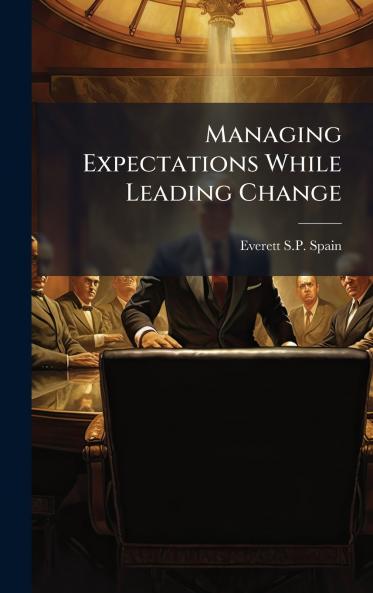



Hardback
₹2372
₹2531
6.28% OFF
(All inclusive*)
Delivery Options
Please enter pincode to check delivery time.
*COD & Shipping Charges may apply on certain items.
Review final details at checkout.
Looking to place a bulk order? SUBMIT DETAILS
Delivery Options
Please enter pincode to check delivery time.
*COD & Shipping Charges may apply on certain items.
Review final details at checkout.
About The Book
Description
Author
<p>First Place Winner of the MacArthur Military Leadership Writing Competition for the CGSC Class of 2006-001. Secretary of the Army Francis Harvey challenged our CGSOC class to continually make your units better. To be able to lead change well the leader must consider not just their own abilities but also the situation and their stakeholders (including their subordinates). Change is isn't easy and real change takes time so managing the expectations of your stakeholders is infinitely important if you want them to be a productive part of the change process and not just a subject of the change effort or a resistor to it. This paper argues that managing expectations is a critical factor in leading successful change. It goes on to provide ideas for choosing who your key stakeholders are a four-part definition of managing expectations twelve applicable lessons learned about managing expectations a framework for analyzing what level and context of expectations management a leader should focusing on and a case study of a wise expectation managers at innovative high school in the Bronx. The author's experience leads him to believe that many organizational leaders see leadership and its more specific subsets of leading change and managing expectations as primarily uni-directional influence attempts and not complex two-way processes. To lead significant change in the future in our units and in cultures that our organizations attempt to affect we leaders will have to change our view of managing expectations from a simple perspective of getting the message out to seeing it as complex system of conscientious and consistent communication mechanisms that evolve as the situation develops in order to reinforce the relationship between the leader and their stakeholders.</p><p>This work has been selected by scholars as being culturally important and is part of the knowledge base of civilization as we know it. This work was reproduced from the original artifact and remains as true to the original work as possible. Therefore you will see the original copyright references library stamps (as most of these works have been housed in our most important libraries around the world) and other notations in the work.</p><p>This work is in the public domain in the United States of America and possibly other nations. Within the United States you may freely copy and distribute this work as no entity (individual or corporate) has a copyright on the body of the work.</p><p>As a reproduction of a historical artifact this work may contain missing or blurred pages poor pictures errant marks etc. Scholars believe and we concur that this work is important enough to be preserved reproduced and made generally available to the public. We appreciate your support of the preservation process and thank you for being an important part of keeping this knowledge alive and relevant.</p><br>

Piracy-free

Assured Quality

Secure Transactions

Fast Delivery

Sustainably Printed
Details
ISBN 13
9781025142067
Publication Date
-22-05-2025
Pages
-26
Weight
-146 grams
Dimensions
-156x234x6.35 mm
