


English



Paperback
₹1561
₹1600
2.44% OFF
(All inclusive*)
Delivery Options
Please enter pincode to check delivery time.
*COD & Shipping Charges may apply on certain items.
Review final details at checkout.
Looking to place a bulk order? SUBMIT DETAILS

Piracy-free

Assured Quality

Secure Transactions
About The Book
Description
Author
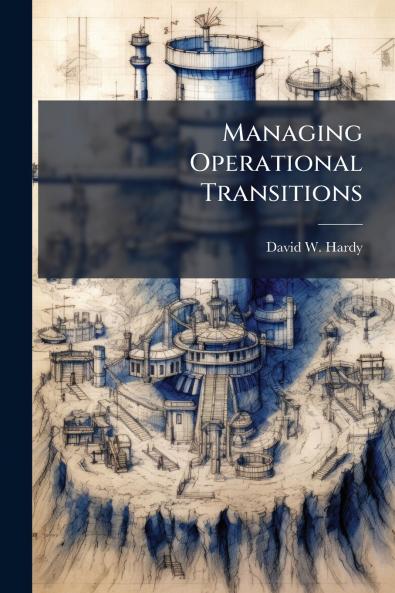
<p>Effective operational transitions are crucial for success but recent interventions indicate that U.S. forces and the Army in particular struggle with planning and executing the transition to post-combat operations. By developing and applying a general model for transitions this study shows that many of the problems associated with post-combat transitions originate from a failure to apply some basic concepts concerning transitions. This monograph develops a general model for transitions using Organizational Development concepts that consists of four inter-related aspects. First organizations must have a clear and accurate picture of the present (pre-change) state. Second organizations must have a clear understanding of the desired future (post-change) state. Three organizations must understand and be able to identify the conditions indicating the need to transition. And four organizations must develop a plan for managing the transition state. This general model for transitions highlights the similarities between all types of transitions and underscores the idea that all effective transitions regardless of when they occur in a campaign follow the same general principles. Difficulties in post-combat transitions often result from a failure to follow these ideas. Two historical case studies Operation DESERT STORM and Operation JUST CAUSE/PROMOTE LIBERTY explore different aspects of transitions. The conclusion is that effective transitions result from having the right capability in the right place at the right time to immediately dominate the situation. The historical case studies illustrate the important role of doctrine and indicate that U.S. forces will continue to have difficulty transitioning to post-combat operations as long as there is a lack of valid post-combat doctrine to guide planning. It offers several principles to guide planning and execution. First commanders must adequately resource the planning and preparation efforts for the post-change</p><p>This work has been selected by scholars as being culturally important and is part of the knowledge base of civilization as we know it. This work was reproduced from the original artifact and remains as true to the original work as possible. Therefore you will see the original copyright references library stamps (as most of these works have been housed in our most important libraries around the world) and other notations in the work.</p><p>This work is in the public domain in the United States of America and possibly other nations. Within the United States you may freely copy and distribute this work as no entity (individual or corporate) has a copyright on the body of the work.</p><p>As a reproduction of a historical artifact this work may contain missing or blurred pages poor pictures errant marks etc. Scholars believe and we concur that this work is important enough to be preserved reproduced and made generally available to the public. We appreciate your support of the preservation process and thank you for being an important part of keeping this knowledge alive and relevant.</p>
Piracy-free
Assured Quality
Secure Transactions
Delivery Options
Please enter pincode to check delivery time.
*COD & Shipping Charges may apply on certain items.
Review final details at checkout.
Details
ISBN 13
9781288288229
Publication Date
-12-11-2012
Pages
-52
Weight
-89 grams
Dimensions
-156x234x2.84 mm
