


English



Paperback
₹3975
(All inclusive*)
Delivery Options
Please enter pincode to check delivery time.
*COD & Shipping Charges may apply on certain items.
Review final details at checkout.
Looking to place a bulk order? SUBMIT DETAILS

Piracy-free

Assured Quality

Secure Transactions
About The Book
Description
Author
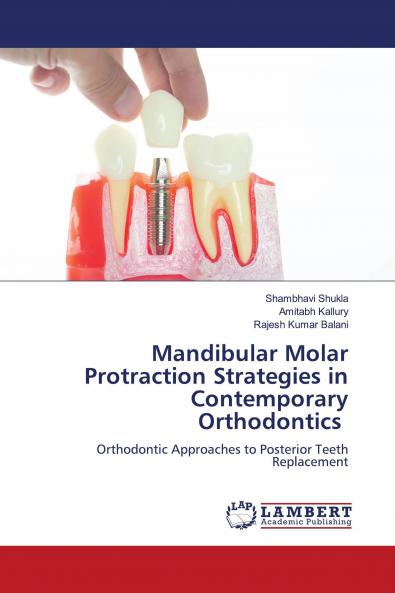
In modern orthodontic practice orthodontists most commonly experience the absence of mandibular molars often due to dental caries periodontal issues or tooth agenesis. Such absence of molars can lead to bite collapse. The loss of mandibular molars is a common clinical issue that leads to problems like tipping over-eruption and compromised occlusal function. As an Orthodontist it's challenging to move the mandibular molars into the spaces left by missing teeth or for the correction of malocclusion. Missing molars can cause posterior spacing affecting treatment outcomes. Endosseous implants and reciprocal tooth movement close gaps caused by molar loss but dense mandibular molars add challenges. Traditional solutions often involve prosthetic replacements or dental implants; however orthodontic molar protraction has emerged as a reliable and effective alternative for space closure especially in younger patients or those looking to avoid dental implants. This book is structured to provide an in-depth understanding of biomechanics treatment planning and practical application of various techniques involved in molar protraction including TADS to aid in controlled tooth movement.
Piracy-free
Assured Quality
Secure Transactions
Delivery Options
Please enter pincode to check delivery time.
*COD & Shipping Charges may apply on certain items.
Review final details at checkout.
Details
ISBN 13
9786208170837
Publication Date
-30-09-2024
Pages
-72
Weight
-111 grams
Dimensions
-150x220x4.3 mm
