


English



₹6480
₹7693
15.77% OFF
(All inclusive*)
Hardback
Delivery Options
Please enter pincode to check delivery time.
*COD & Shipping Charges may apply on certain items.
Review final details at checkout.
Looking to place a bulk order? SUBMIT DETAILS
Delivery Options
Please enter pincode to check delivery time.
*COD & Shipping Charges may apply on certain items.
Review final details at checkout.
About The Book
Description
Author
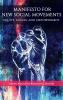
<p>The world is currently witnessing the emergence of a new context for education labor and transformative social movements. Global flows of people capital and energy increasingly define the world we live in. The multinational corporation with its pursuit of ever-cheaper sources of labor and materials and its disregard for human life is the dominant form of economic organization where capital can cross borders but people can&rsquo;t.</p><p>Affirmative action democracy and human rights are moving in from the margins to challenge capitalist priorities of &ldquo;efficiency&rdquo; i.e. exploitation. In some places the representatives of popular movements are actually taking the reins of state power. Across the globe new progressive movements are emerging to bridge national identities and boundaries in solidarity with transnational class gender and ethnic struggles.</p><p>At this juncture educators have a key role to play. The ideology of market competition has become more entrenched in schools even as opportunities for skilled employment diminish. We must rethink the relationship between schooling and labor developing transnational pedagogies that draw upon the myriad social struggles shaping students&rsquo; lives and communities. Critical educators need to connect with other social movements to put a radically democratic agenda based on the principles of equity access and emancipation at the center of educational praxis. Many countries in Latin America like in other continents are developing new alternatives for the reconstruction of social projects; these emerging sources of hope are the central focus of this book. Major historical change always starts with people&rsquo;s social movement.</p><p>Democracy can be one of the best political and social systems in the world but for it to work entails the sustainable participation of citizens. Above all it requires that people be informed and critically educated since the quality of democracy depends on quality of education.There are 2 kinds of power: money and people. If people exercise their agency they can be more powerful than money.&nbsp;There are some organizing principles of social movements as: &ldquo;don&rsquo;t do for others what they should do for themselves.&rdquo;&nbsp;Saul Alinsky wrote: <em>Rules for Radicals: A pragmatic primer for realistic radicals;</em> Mary Rogers: <em>Cold Anger: A story of faith and power politics</em>; Michael Gecan:&nbsp;<em>Going Public: An organizer&rsquo;s guide to citizen action</em>;&nbsp;and Ernesto Cortez&rsquo;s <em>Industrial Area Foundation</em> are all great sources for organized activism that <em>do </em>work. I put some of these principles to the test and they produced positive results&nbsp;I was a founder and president of a union at my university and I lived my whole life as an activist and learned that we can do more together than alone. Now we also have a new digital war&nbsp;with the <em>Cambridge Analitica and Breitbart&#39;s&nbsp;</em>fake news manipulation; however we also have social-justice hacktivism to counter act it as well as other democratic social media venues that critical thinkers and activist use. The Chapters in this book demonstrate the importance of widening and diversifying social movements at the same time emphasizes the need to build cohesive alliances among the different fronts. What some people think is &quot;impossible&quot; can become a transformed reality for those who dare attempt changing the world as global citizens.</p><p>&nbsp;</p><p>&nbsp;</p><p>&nbsp;</p><p>&nbsp;</p><p>&nbsp;</p><p>&nbsp;</p><p>&nbsp;</p><p>&nbsp;</p>

Piracy-free

Assured Quality

Secure Transactions

Fast Delivery

Sustainably Printed
Details
ISBN 13
9781641137928
Publication Date
-18-10-2019
Pages
-234
Weight
-431 grams
Dimensions
-156x234x14.29 mm
