



This Book is Out of Stock!
English



Paperback
₹3515
₹4374
19.64% OFF
(All inclusive*)
Delivery Options
*COD & Shipping Charges may apply on certain items.
Review final details at checkout.
Looking to place a bulk order? SUBMIT DETAILS

Piracy-free

Assured Quality

Secure Transactions
About The Book
Description
Author
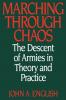
In spite of the outcome of the Cold War English argues persuasively here that the nuclear defensive posture adopted by the North Atlantic Treaty Organization (NATO) was inherently flawed. Victory in the Cold War moreover seems to have increased the attractiveness of this potentially dangerous model. In fact NATO''s attempts to replace conventional armies with nuclear technology represented a misreading of history inasmuch as war has always been more of a social than technological phenomenon. From his succinct survey of the growth and operations of field armies from medieval times to the Gulf War English concludes that the legitimately constituted conventional army of the nation-state still remains the best instrument for bringing some semblance of order to the destructive chaos of war.The development of field armies has involved much more sophistication than generally supposed. In both practice and theory army operations have been as knowledge-based and intellectually rigorous as any academic discipline ensuring them an enduring place as a practical means of applying massive force. Fortunately the NATO attempt to replace conventional armies with nuclear technology was never tested in a real war. But English suggests that the likelihood of deterrence continuing in war because of its transmutability also offers hope that it can be controlled in the future as it was in the past by social forces. This book offers a longer more realistic view of war than that normally embraced by technocrats in search of better weapons and peacemakers in search of utopia.This book also addresses in detail the questions of why armies became so large and why war itself transmutated. The technological transformation of war that occurred after 1815 is discussed in turn for the effect it exerted upon the future operations of armies. A novel perspective on the tactical and operational progression of warfighting up to the end of World War II is also provided through an examination of modern defensive theory. On a more elevated plane the book critically assesses the ways in which nuclear deterrence ultimately affected NATO''s defensive posture in central Europe. Also subjected to detailed scrutiny are the theoretical and practical dimensions of ground force concepts for the defense of the NATO central front. Finally English evaluates ground force operations in the Gulf War with a view to drawing relevant conclusions and lessons for the future.
Piracy-free
Assured Quality
Secure Transactions
*COD & Shipping Charges may apply on certain items.
Review final details at checkout.
₹3515
₹4374
19% OFF
Paperback
Out Of Stock
All inclusive*
Details
ISBN 13
9780275963927
Publication Date
-30-05-1998
Pages
-232
Weight
-320 grams
Dimensions
-152x229x12.42 mm
