


English


Paperback
₹1848
(All inclusive*)
Delivery Options
Please enter pincode to check delivery time.
*COD & Shipping Charges may apply on certain items.
Review final details at checkout.
Looking to place a bulk order? SUBMIT DETAILS

Piracy-free

Assured Quality

Secure Transactions
About The Book
Description
Author
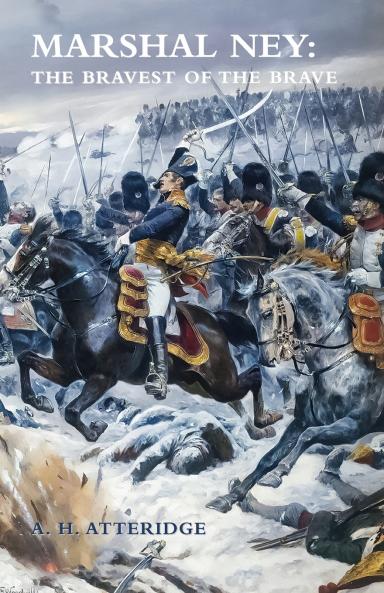
<p><span style=color: rgba(0 0 0 1)>Biography of a Marshal in Napoleon's army who referred to him as the bravest of the brave. He was executed by&nbsp;French royalists&nbsp;six months after Waterloo.</span></p><p><span style=color: rgba(0 0 0 1)>Michel Ney was born in Saarlouis in 1769 and died in front of a French (royalist) firing squad on 7 December 1815 six months after the defeat of Napoleon at Waterloo. He began his army career in 1788 when on 6th December he enlisted in the 5th Hussars and took his first step up the ladder that would lead to Marshal when he was promoted brigadier or corporal on 1st January 1791. A year later he was a sergeant-of-horse and three months after that&nbsp;May 1792 a sergeant-major. In that same month war was declared against Austria and so began the long period of the Wars of the Revolution and the Empire which saw the rise of Napoleon. Ney's chance too had come and he made good use of it. He saw his first pitched battle at Valmy in September 1792 by which time he had become an officer a sub-lieutenant promoted during his first campaign. His promotion thereafter was rapid and within two years at the age of twenty-five he was a Chef de Brigade equivalent to a colonel.In May 1801 he met the man who was to have such an influence on his subsequent career Napoleon though he showed no disposition to attach himself to that particular rising star. In 1804 Napoleon restored the rank of Marshal of France and among those promoted to that rank was Ney. In 1805 as Commander of the 6th Corps of the Grand Army Ney took part in the campaign of Ulm and Austerlitz. Subsequently in the war against Prussia his corps fought at Jena and Friedland. During the Peninsular War his corps was with the Army of Portugal under Massena with whom he fell out and was deprived of his command and returned to France. Napoleon reinstated him for his Russian campaign and gave him command of the3rd Corps and it was during this campaign he received the accolade Bravest of the Brave. Atteridge's biography covers Ney's career in full and notes his showing at Quatre Bras was no&nbsp;longer that of a clear sighted commander while at Waterloo his recklessness was more than evident&nbsp;a sombre end to a great career. To the royalists he was a traitor having declared for the king when Napoleon was defeated in 1814 and then 'turned coat' when Napoleon returned from exile for the last hundred days that ended at Waterloo.</span></p>
Piracy-free
Assured Quality
Secure Transactions
Delivery Options
Please enter pincode to check delivery time.
*COD & Shipping Charges may apply on certain items.
Review final details at checkout.
Details
ISBN 13
9781474540261
Publication Date
-15-05-2024
Pages
-426
Weight
-499 grams
Dimensions
-140x216x22.04 mm
