

English


Hardback
₹3361
(All inclusive*)
Delivery Options
Please enter pincode to check delivery time.
*COD & Shipping Charges may apply on certain items.
Review final details at checkout.
Looking to place a bulk order? SUBMIT DETAILS
Delivery Options
Please enter pincode to check delivery time.
*COD & Shipping Charges may apply on certain items.
Review final details at checkout.
About The Book
Description
Author
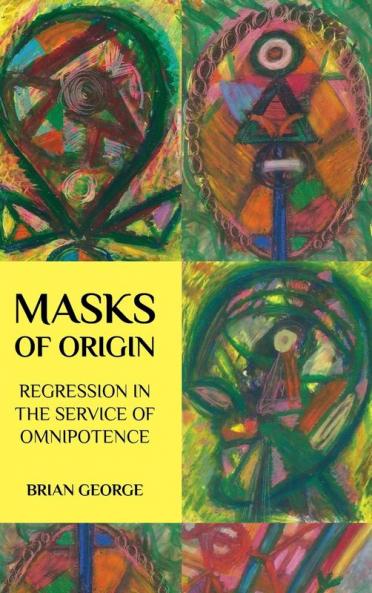
We are I believe as supernatural as we are natural. Our home is the sum-total of all possible realities. When we act we act both in this world and the next.Brian George’s debut collection of personal essays invites the reader on a journey beyond the normal categories of space time and narrative structure toward a further shore of multidimensional and more-than-human experience. These are “essays” in the sense of attempts or explorations of a subject which is too vast and too profound yet also paradoxically too familiar (to some deepest part of us) to be exhausted by any one expression or approach. As George puts it “The book is not quite a collection of essays or the fragments of an autobiography or a record of inter-dimensional journeys or a work of metaphysics or a sociopolitical critique or an attempt to formulate a contemporary mythology—although it has elements of all of these.” To read Masks of Origin and to re-read it perhaps and to live with all that it reveals conceals and intimates is to risk encountering the unfathomable within ourselves as much as in the art. As George recursively unravels the contours of his peculiar spiritual landscape we begin to see aspects our own world history and generational trauma transfigured—as in a psychedelic mirror—in a startling new light. Yet the only drug administered here is the noötropic of poetic language. (You may still wish to avoid operating heavy machinery while under the influence of this book.) With penetrating insight into the soul of post-industrial America and a rare ability to invoke transpersonal states of knowing (even accompanying the thrill of the unknown) in the reader and with a metaphysical bravado that any dada surrealist might envy there is also—how to say this?—a down-to-earthness about George that softens our defenses. In Masks of Origin we meet the artist not only as a cosmic traveler and esoteric yogi but also as a schoolboy a son a rebel a lover a teacher a friend/enemy and a family man—in short as a person with adventurous goals but few pretenses. As we follow George in the probing of his origins we may find that we have suddenly drawn much closer to our own.Praise for Masks of OriginGeorge’s work is precisely its own thing: an archaic genre the western world has long forgotten it possessed a genre I suspect was already defunct to the Western imagination even at the time of Homer. George is a phenomenal pagan thrown forwards or backwards in time to this era. I will hesitate to call his work poetry not that it does not more than serve the function of poetry but his method is one that predates the definitions we have given poetry in modern literary theory. It is primal incantation a spell dreaming as vital action. In Yorubaland the part of Nigeria where I grew up one of the praise epithets of Aziza (a supernatural being who travels in a tornado) is ‘He is the one for whom thought and action are one and the same.’. I read recently that in Holland they have perfected a method that enables their asphalt roads to automatically discover their potholes and repair themselves. I believe the incantation genre as explored by George in Masks of Origin is a technology that assists the earth in her attempts to heal herself after centuries of our having feasted recklessly on her flesh. George’s work harks back to a moment in time or dreamtime memory in which to speak is to act powerfully with cosmic stealth and at times with purgative violence. Its aim is less to inform—though it informs aplenty—than to widen the reader’s gaze in a fundamental way almost akin to giving the reader the gift of a new tongue.Olujide Adebayo-Begun author of The Book of Supreme Happiness

Piracy-free

Assured Quality

Secure Transactions

Fast Delivery

Sustainably Printed
Details
ISBN 13
9780971663596
Publication Date
-14-11-2023
Pages
-400
Weight
-628 grams
Dimensions
-152x229x22.23 mm
