

English


Paperback
₹4201
₹4620
9.07% OFF
(All inclusive*)
Delivery Options
Please enter pincode to check delivery time.
*COD & Shipping Charges may apply on certain items.
Review final details at checkout.
Looking to place a bulk order? SUBMIT DETAILS

Piracy-free

Assured Quality

Secure Transactions
About The Book
Description
Author
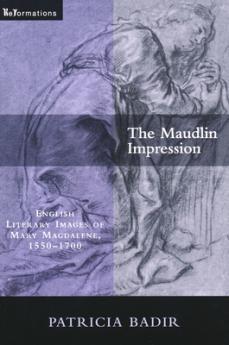
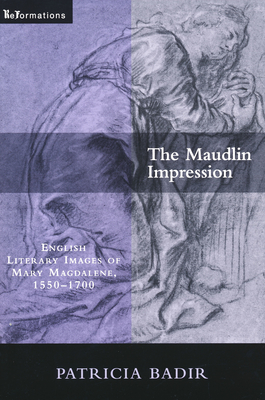
<p>Patricia Badir's <i>The Maudlin Impression</i> investigates the figure of Mary Magdalene in post-medieval English religious writings and visual representations. Badir argues that the medieval Magdalene story was not discarded as part of Reformation iconoclasm but was enthusiastically embraced by English writers and artists and retold in a wide array of genres. This rich study bridges the historical division between medieval and early modern culture by showing the ways in which Protestant writers as well as Catholics used the medieval stories art and symbolism related to the biblical Magdalene as resources for thinking about the role of the affective and erotic in Christian devotion. Their literary and artistic glosses protected a range of religious devotional practices and lent embodied tangible form to the God of the Reformation. They employed the Magdalene figure to articulate religious experience by means of a poetics that could avoid controversial questions of religious art while exploring the potency and appeal of the beautiful. <i>The Maudlin Impression</i> is a literary history of imitation and invention. It participates in the religious turn in early modern studies by demonstrating the resilience of a single topos across time and across changing Christian beliefs.</p> <p>In this historically rich and theoretically informed study Patricia Badir argues that the medieval figure of Mary Magdalene serves as a 'site of memory' for early modern writers enabling them both to reflect on what has been lost in the aftermath of the Reformation and to fashion their own Protestant and Counter-Reformation models of piety repentance mourning and holiness. Drawing from poems plays sermons homilies biographies and paintings Badir convincingly demonstrates the remarkable resiliency and flexibility of the Magdalene trope in the sixteenth and seventeenth centuries. Her fascinating narrative traces the evolution of the Magdalene from the Reformation to the Restoration and raises provocative questions about the mnemonic function of religious art the power of beautiful images in an iconoclastic culture and the place of affect longing and embodiment in a Protestant poetics. --Huston Diehl University of Iowa</p> <p>In the aftermath of the Reformation the English wrote about Mary Magdalene. Sometimes she belongs to a specifically Protestant poetics: the gaudy Catholic whore turned Reformed penitent. Yet most post-Reformation Magdalenes resist Catholic-or-Protestant pigeonholing; instead all unexpectedly Badir's quick-eyed scholarship discloses continuities convergences recuperations. . . . [Her] book luminously teaches the all-important lesson that the Reformation fought in polemics was not necessarily the Reformation found in poetry. --Debora Shuger University of California Los Angeles</p> <p>A marvelously textured account from an early modern perspective of an alluring sacred figure about whom there has recently been a Renaissance of cultural interest--popular as well as scholarly. Badir subtly explicates how the theological and artistic issues concerning the devotional depiction of the Magdalene go to the core of Christian representational practice provoking all along the way questions about gender desire and sacred eroticism. --Richard Rambuss Emory University</p>
Piracy-free
Assured Quality
Secure Transactions
Delivery Options
Please enter pincode to check delivery time.
*COD & Shipping Charges may apply on certain items.
Review final details at checkout.
Details
ISBN 13
9780268022150
Publication Date
-15-10-2009
Pages
-322
Weight
-438 grams
Dimensions
-152x229x17.1 mm
