

English


Paperback
₹5870
₹7738
24.14% OFF
(All inclusive*)
Delivery Options
Please enter pincode to check delivery time.
*COD & Shipping Charges may apply on certain items.
Review final details at checkout.
Looking to place a bulk order? SUBMIT DETAILS
Delivery Options
Please enter pincode to check delivery time.
*COD & Shipping Charges may apply on certain items.
Review final details at checkout.
About The Book
Description
Author(s)
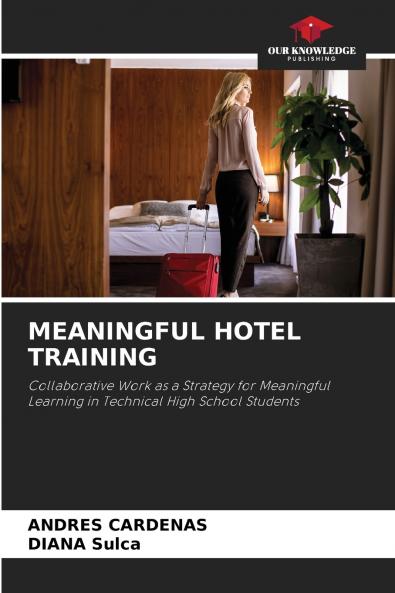
This study applies teaching techniques based on collaborative work to promote meaningful learning in high school students in hotel services. Under a quantitative approach and quasi-experimental design two groups of third year students are involved in the educational process: the experimental group (parallel A) which works with collaborative strategies and the control group (parallel B) which maintains the traditional methodology.The research has a correlational scope comparing the results before and after the intervention. The T-Student tests show that while the control group does not present significant variations between pretest and posttest the experimental group shows a statistically significant improvement in its results. Furthermore although both groups started from similar levels the post-test reveals a significant difference in favor of the group that worked collaboratively.These findings confirm the effectiveness of collaborative work as a pedagogical tool to strengthen meaningful learning in technical and hotel contexts.

Piracy-free

Assured Quality

Secure Transactions

Fast Delivery

Sustainably Printed
Details
ISBN 13
9786209323621
Publication Date
-17-12-2025
Pages
-68
Weight
-106 grams
Dimensions
-152x229x4.14 mm
