

English


Paperback
₹4290
₹4791
10.46% OFF
(All inclusive*)
Delivery Options
Please enter pincode to check delivery time.
*COD & Shipping Charges may apply on certain items.
Review final details at checkout.
Looking to place a bulk order? SUBMIT DETAILS
Delivery Options
Please enter pincode to check delivery time.
*COD & Shipping Charges may apply on certain items.
Review final details at checkout.
About The Book
Description
Author
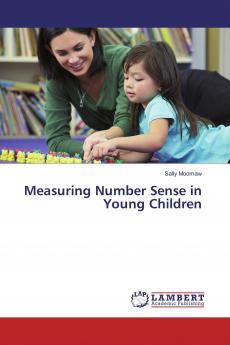
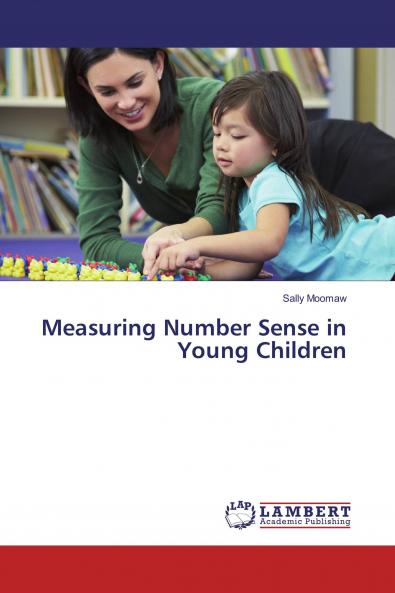
Accurate assessment of preschool children is challenging with studies of dynamic measures of early math performance missing from the field. Therefore curriculum-based measures that inform planning and instructional decisions are of particular interest. The purpose of this research was to evaluate a constructivist mathematics curriculum-based measure (MCBM) for assessing number sense in preschool children. The hypothesis was that six measurable variables—quantification level counting skills set comparison numeral recognition combining sets and patterning—would make significant contributions to the latent construct of number sense. The measurement tool was an interactive game consisting of teddy bear counters and a series of cards in a standardized order played between assessor and a child. The sample consisted of 108 children ages 3–5 years. Confirmatory factor analysis used to evaluate the hypothesized model indicated a good model fit: χ2(3N=108)=4.246 p=.236; NFI=.990; CFI=.997; and RMSEA=.062. Standardized path coefficients ranged from .71 to .88. The results suggest that the MCBM was a valid and reliable measure of number sense for this sample.

Piracy-free

Assured Quality

Secure Transactions

Fast Delivery

Sustainably Printed
Details
ISBN 13
9783330010628
Publication Date
-30-12-2016
Pages
-116
Weight
-161 grams
Dimensions
-150x220x6.56 mm
