

by
MOSCATI
English


Hardback
₹17581
₹22543
22.01% OFF
(All inclusive*)
Delivery Options
Please enter pincode to check delivery time.
*COD & Shipping Charges may apply on certain items.
Review final details at checkout.
Looking to place a bulk order? SUBMIT DETAILS

Piracy-free

Assured Quality

Secure Transactions
About The Book
Description
Author
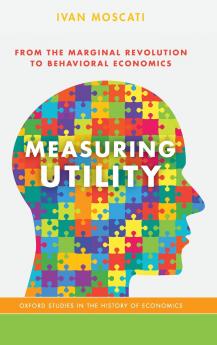
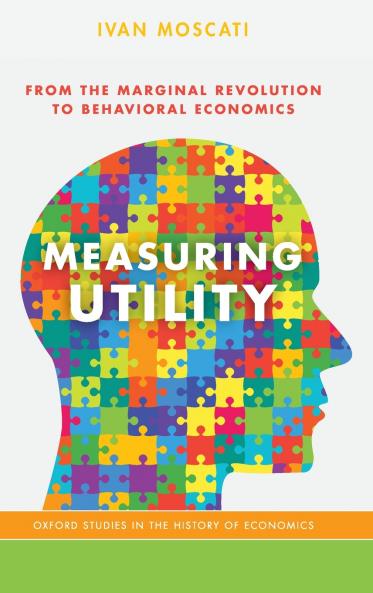
Utility is a key concept in the economics of individual decision-making. However utility is not measurable in a straightforward way. As a result from the very beginning there has been debates about the meaning of utility as well as how to measure it. This book is an innovative investigation of how these arguments changed over time.Measuring Utility reconstructs economists'' ideas and discussions about utility measurement from 1870 to 1985 as well as their attempts to measure utility empirically. The book brings into focus the interplay between the evolution of utility analysis economists'' ideas about utility measurement and their conception of what measurement in general means. It also explores the relationships between the history of utility measurement in economics the history of the measurement of sensations in psychology and the history of measurement theory in general. Finally the book discusses some methodological problems related to utility measurement such as the epistemological status of the utility concept and its measures.The first part covers the period 1870-1910 and discusses the issue of utility measurement in the theories of Jevons Menger Walras and other early utility theorists. Part II deals with the emergence of the notions of ordinal and cardinal utility during the period 1900-1945 and discusses two early attempts to give an empirical content to the notion of utility. Part III focuses on the 1945-1955 debate on utility measurement that was originated by von Neumann and Morgenstern''s expected utility theory (EUT). Part IV reconstructs the experimental attempts to measure the utility of money between 1950 and 1985 within the framework provided by EUT.This historical and epistemological overview provides keen insights into current debates about rational choice theory and behavioral economics in the theory of individual decision-making and the philosophy of economics.
Piracy-free
Assured Quality
Secure Transactions
Delivery Options
Please enter pincode to check delivery time.
*COD & Shipping Charges may apply on certain items.
Review final details at checkout.
Details
ISBN 13
9780199372768
Publication Date
-05-06-2019
Pages
-340
Weight
-576 grams
Dimensions
-156x234x20.64 mm
