

English


Paperback
₹4720
₹6215
24.05% OFF
(All inclusive*)
Delivery Options
Please enter pincode to check delivery time.
*COD & Shipping Charges may apply on certain items.
Review final details at checkout.
Looking to place a bulk order? SUBMIT DETAILS
Delivery Options
Please enter pincode to check delivery time.
*COD & Shipping Charges may apply on certain items.
Review final details at checkout.
About The Book
Description
Author
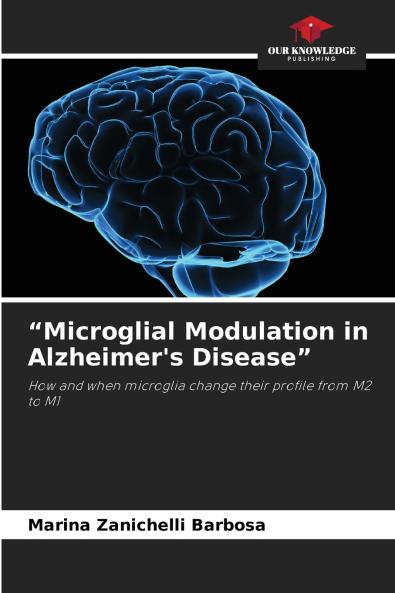
There are many unclear mechanisms regarding the pathogenesis of Alzheimer's disease (AD) and no form of prevention or cure. It is known that in the development of the disease microglia can undergo phenotypic changes and that this can directly influence neurons. In order to understand more about the neuroimmune interactions that exist in Alzheimer's disease this project's main objective is to investigate when and how the change from M2 to M1 microglia occurs in the triple transgenic model (3xTg-AD) the murine model that most closely resembles the disease in humans. This pattern change reflects neurodegeneration and is related to beta-amyloid plaques and neurofibrillary tangles. We know that increased production of reactive oxygen species (ROS) accompanies the change from the M2 to M1 phenotype which is responsible for the release of pro-inflammatory cytokines that can be directly toxic to neurons. Therefore we want to know when this occurs and what mechanism is involved in the change in the activation pathway of microglia from the alternative phenotype (M2) to the classic phenotype (M1) in 3xTg-AD mice triple transgenic for AD.

Piracy-free

Assured Quality

Secure Transactions

Fast Delivery

Sustainably Printed
Details
ISBN 13
9786200757296
Publication Date
-26-07-2025
Pages
-52
Weight
-85 grams
Dimensions
-152x229x3.16 mm
