

English


Paperback
₹9177
₹11494
20.16% OFF
(All inclusive*)
Delivery Options
Please enter pincode to check delivery time.
*COD & Shipping Charges may apply on certain items.
Review final details at checkout.
Looking to place a bulk order? SUBMIT DETAILS

Piracy-free

Assured Quality

Secure Transactions
About The Book
Description
Author(s)
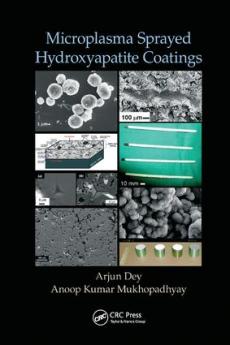
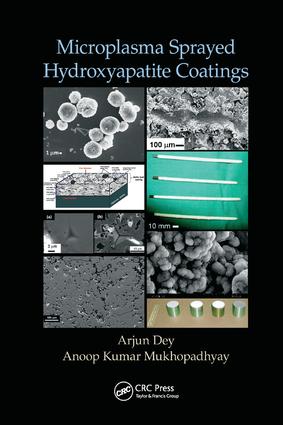
<p>There has been enormous growth in the use of medical implants. However in the case of hip replacement loosening of metallic prosthesis fixed with polymethylmethylacrylate bone cement has resulted in painstaking revision surgery which is a major problem for the patient surgeon and biomedical technology itself. In fact global recognition of this problem led to the development of cementless fixation through the novel introduction of a bioactive hydroxyapatite (HAp) coating on biomedical-grade metallic implants. Since then a wide variety of coating methods have evolved to make the HAp coatings on metallic implants more reliable.</p><p>Microplasma Sprayed Hydroxyapatite Coatings discusses plasma spraying and other related HAp coating techniques<b> </b>focusing on the pros and cons of macroplasma sprayed (MAPS)- and microplasma sprayed (MIPS)-HAp coatings. The book begins by explaining what a biomaterial really is what the frequently used term biocompatibility stands for and why it is so important for biomaterials to be biocompatible. It then:</p><ul> <li>Examines the structural chemical macromechanical micro/nanomechanical and tribological properties and residual stress of HAp coatings</li> <li>Evaluates the efficacies under simulated body fluid immersion for MAPS- and MIPS-HAp coatings developed on biomedical implant-grade SS316L substrates</li> <li>Offers a comprehensive survey of state-of-the-art <i>in vivo </i>studies of MIPS-HAp coatings presenting the results of pioneering research related to bone defect fixation</li> </ul><p>Shedding light on the future scope and possibilities of MIPS-HAp coatings <b>Microplasma Sprayed Hydroxyapatite Coatings </b>provides a valuable reference for students researchers and practitioners of biomedical engineering and materials science.</p>
Piracy-free
Assured Quality
Secure Transactions
Delivery Options
Please enter pincode to check delivery time.
*COD & Shipping Charges may apply on certain items.
Review final details at checkout.
Details
ISBN 13
9781138748866
Publication Date
-26-07-2017
Pages
-288
Weight
-413 grams
Dimensions
-156x234x15.4 mm
