


English




Paperback
₹4882
(All inclusive*)
Delivery Options
Please enter pincode to check delivery time.
*COD & Shipping Charges may apply on certain items.
Review final details at checkout.
Looking to place a bulk order? SUBMIT DETAILS

Piracy-free

Assured Quality

Secure Transactions
About The Book
Description
Author(s)
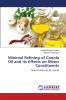
The minimal refining method offers the potential to produce canola oil with an increased nutritional profile that retains excellent sensory qualities. Canola oil contains the lowest amount of saturated fatty acids and high amount of phytosterols and tocopherols. Refining process is required to remove undesirable components such as free fatty acids chlorophyll gums trace metals oxidized products from the crude oils. Traditional refining consists of degumming neutralization bleaching and deodorization stages. Some part of sterols and tocopherols are however inevitably removed from the oil during various stages of refining such as washing with hot water absorption by soap or clays and stripping off by steam. More than 40 percent of sterols and tocopherols are lost during deodorization which is conducted at high temperature and low vacuum pressure. Minimal refining method replaces sodium hydroxide with a weaker alkali to minimize degradation of tocopherols and sterols. Natural clays are used for bleaching instead of acidified clays and deodorization is omitted completely to preserve natural canola oil flavor and healthy components.
Piracy-free
Assured Quality
Secure Transactions
Delivery Options
Please enter pincode to check delivery time.
*COD & Shipping Charges may apply on certain items.
Review final details at checkout.
Details
ISBN 13
9783659342912
Publication Date
-04-03-2013
Pages
-116
Weight
-169 grams
Dimensions
-152x229x6.82 mm
