

English


₹12590
₹14864
15.3% OFF
(All inclusive*)
Hardback
Delivery Options
Please enter pincode to check delivery time.
*COD & Shipping Charges may apply on certain items.
Review final details at checkout.
Looking to place a bulk order? SUBMIT DETAILS
Delivery Options
Please enter pincode to check delivery time.
*COD & Shipping Charges may apply on certain items.
Review final details at checkout.
About The Book
Description
Author(s)
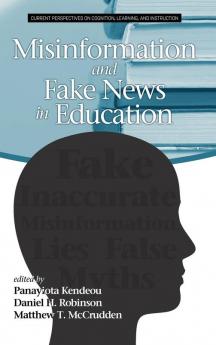
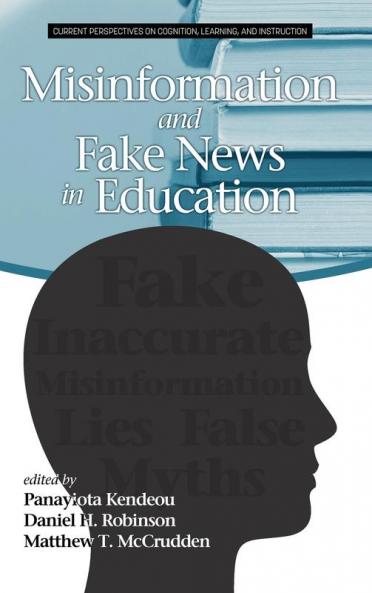
<p>Today like no other time in our history the threat of misinformation and disinformation is at an all-time high. This is also true in the field of Education. Misinformation refers to false information shared by a source who intends to inform but is unaware that the information is false such as when an educator who recommends the use of a learning strategy that is not actually beneficial. Disinformation is false information shared by a source who has the intent to deceive and is aware that the information is false such as when a politician claim that high-stakes testing will fix K-12 education when in fact there is no evidence to support this practice. This book provides recent examples of how misinformation and disinformation manifest in the field of education and remedies.</p><p><em>Section One Susceptibility to Misinformation</em> focuses on factors that influence the endorsement and persistence of misinformation. This section will include chapters on: the appeal and persistence of &ldquo;zombie concepts&rdquo; in education; learner and message factors that underlie the adoption of misinformation in the context of the newly proposed Likelihood of Adoption Model; cognitive and motivational factors that contribute to misinformation revision failure; cognitive biases and bias transfer in criminal justice training; the influence of conspiratorial and political ideation on the use of misinformation; and how educational culture and policy has historically given rise to quackery in education.</p><p><em>Section Two Practices in the Service of Reducing Misinformation in Education</em> focuses on practices aimed at reducing the impact of misinformation and includes chapters on: misinformation in the education of children with ASD and its influence on educational and intervention practices; the promise of using dynamical systems and computational linguistics to model the spread of misinformation; systematic attempts to reduce misinformation in psychology and education both in and out of the classroom; and the potential perils of constructivism in the classroom as well as the teaching of critical thinking. Each section has a discussion chapter that explicates emerging themes and lessons learned and fruitful avenues for future research.</p><p>&nbsp;</p><p>&nbsp;</p>

Piracy-free

Assured Quality

Secure Transactions

Fast Delivery

Sustainably Printed
Details
ISBN 13
9781641138529
Publication Date
-24-09-2019
Pages
-336
Weight
-571 grams
Dimensions
-156x234x19.05 mm
