

English


Paperback
₹7819
₹10309
24.15% OFF
(All inclusive*)
Delivery Options
Please enter pincode to check delivery time.
*COD & Shipping Charges may apply on certain items.
Review final details at checkout.
Looking to place a bulk order? SUBMIT DETAILS
Delivery Options
Please enter pincode to check delivery time.
*COD & Shipping Charges may apply on certain items.
Review final details at checkout.
About The Book
Description
Author
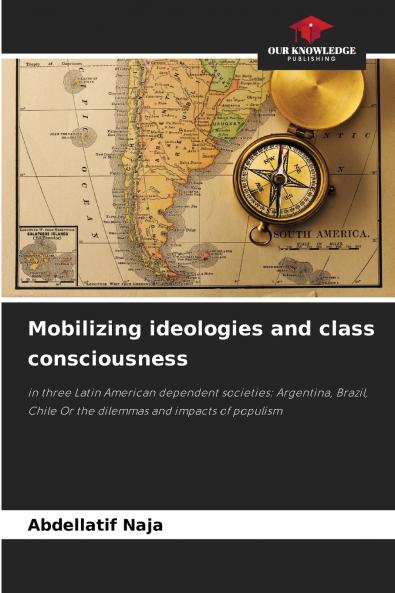
The broad outlines of this study can be summed up in three main points. On the one hand we have endeavored to show that mobilizing ideologies are structurally determined. They are at once the expression of modes of dependence and of the structure of social relations specific to each social formation. As a result the configuration they take on is the product of particular alliances between social classes.On the other hand while integrative populism was a prime example of what might be called an ideology-brake given its alienating effects reformist populism was more a case of an ideology-motor.Finally and this is our third point we have tried to highlight the existence of a characteristic link between the level of consciousness and the ascending or descending aspect of the mobilization process.

Piracy-free

Assured Quality

Secure Transactions

Fast Delivery

Sustainably Printed
Details
ISBN 13
9786206833567
Publication Date
-08-05-2025
Pages
-124
Weight
-179 grams
Dimensions
-152x229x7.42 mm
