

English


Paperback
₹7560
(All inclusive*)
Delivery Options
Please enter pincode to check delivery time.
*COD & Shipping Charges may apply on certain items.
Review final details at checkout.
Looking to place a bulk order? SUBMIT DETAILS
Delivery Options
Please enter pincode to check delivery time.
*COD & Shipping Charges may apply on certain items.
Review final details at checkout.
About The Book
Description
Author
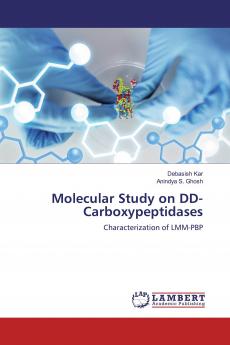
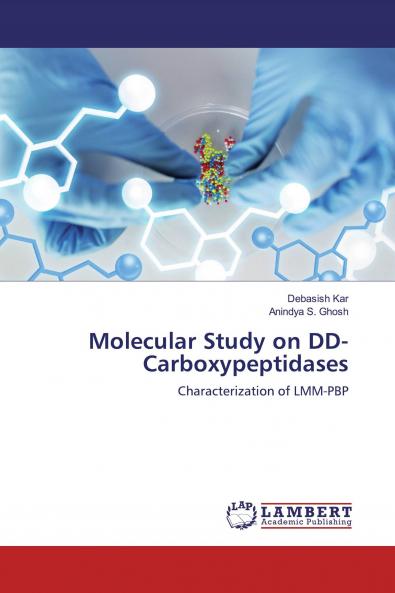
Penicillin-binding proteins (PBPs) are instrumental in the polymerization and remodelling of the peptidoglycans (PG) the stress-bearing component of the bacterial cell wall. PBPs have been exploited as the targets of the highly successful antibiotics β-lactams. PBP5 the most abundant low molecular mass (LMM) PBP functions as a D-alanine carboxypeptidase (DD-CPase). DacD a member of LMM-PBPs has sequences similarities with E. coli PBP5. However the function(s) of DacD in E. coli or its homologue in K. pneumoniae (KDacD) is unclear. The genes of DacD KDacD and AmpH were cloned to assess their molecular nature. The proteins were overexpressed in E. coli purified through ampicillin-affinity chromatography and subsequently analyzed for their kinetic behaviours. To address the molecular interactions in silico 3D-models of the proteins were created and their structure-function relationships were studied with reference to the E. coli PBP5. To understand the physiological significance of the ''Ω-like'' loop in PBP5 A184E is generated (PBP5_A184E). Surprisingly the point mutation introduces β-lactamase nature in PBP5 without affecting its DD-CPase activity.

Piracy-free

Assured Quality

Secure Transactions

Fast Delivery

Sustainably Printed
Details
ISBN 13
9786200456007
Publication Date
-23-10-2019
Pages
-192
Weight
-268 grams
Dimensions
-150x220x10.46 mm
