



This Book is Out of Stock!
English



Paperback
₹1834
(All inclusive*)
Delivery Options
*COD & Shipping Charges may apply on certain items.
Review final details at checkout.
Looking to place a bulk order? SUBMIT DETAILS
*COD & Shipping Charges may apply on certain items.
Review final details at checkout.
About The Book
Description
Author
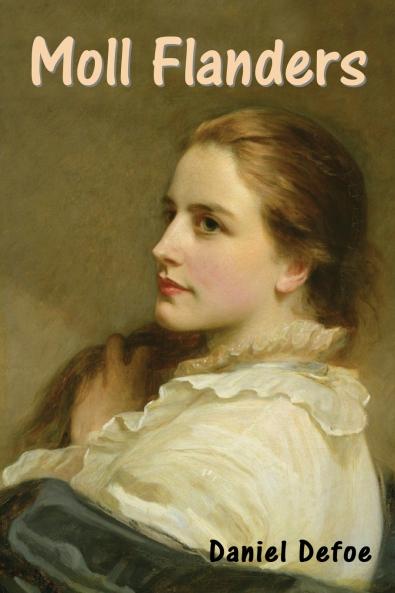
<p><em>The Fortunes and Misfortunes of the Famous Moll Flanders</em> (commonly known as simply <em>Moll Flanders</em>) is a novel written by Daniel Defoe in 1722.</p><p>Defoe wrote this after his work as a journalist and pamphleteer. By 1722 Defoe had become recognized as a novelist with the success of <em>Robinson Crusoe</em> in 1719. His political work was tapering off at this point due to the fall of both Whig and Tory party leaders with whom he had been associated; Robert Walpole was beginning his rise and Defoe was never fully at home with the Walpole group. Defoe's Whig views are nevertheless evident in the story of Moll and the novel's full title gives some insight into this and the outline of the plot:</p><p><br></p><p>The Fortunes and Misfortunes of the Famous Moll Flanders Etc. Who Was Born In Newgate and During a Life of Continu'd Variety For Threescore Years Besides Her Childhood Was Twelve Year a Whore Five Times a Wife [Whereof Once To Her Own Brother] Twelve Year a Thief Eight Year a Transported Felon In Virginia At Last Grew Rich Liv'd Honest and Died a Penitent. Written from her own Memorandums.</p><p>&nbsp;</p><p>&nbsp;</p><p><strong>About the auhor:</strong></p><p><strong>&nbsp;</strong></p><p>Daniel Defoe (c.1659 - 24 April 1731) born Daniel Foe was an English writer journalist and pamphleteer who gained enduring fame for his novel Robinson Crusoe. Defoe is notable for being one of the earliest proponents of the novel as he helped to popularize the form in Britain and is even referred to by some as one of the founders of the English novel. A prolific and versatile writer he wrote more than five hundred books pamphlets and journals on various topics (including politics crime religion marriage psychology and the supernatural). He was also a pioneer of economic journalism.</p><p>&nbsp;</p><p>The extent and particulars of Defoe's writing in the period from the Tory fall in 1714 to the publication of <em>Robinson Crusoe</em> in 1719 is widely contested. Defoe comments on the tendency to attribute author-less tracts to him in his self-vindicatory <em>Appeal to Honour and Justice</em> (1715) a defence of his part in Harley's Tory ministry (1710-14). Other works that are thought to anticipate his novelistic career include: <em>The Family Instructor</em> (1715) an immensely successful conduct manual on religious duty; <em>Minutes of the Negotiations of Monsr. Mesnager</em> (1717) in which he impersonates Nicolas Mesnager the French plenipotentiary who negotiated the Treaty of Utrecht (1713); and <em>A Continuation of the Letters Writ by a Turkish Spy</em> (1718) a satire on European politics and religion professedly written by a Muslim in Paris.</p><p>From 1719 to 1724 Defoe published the novels for which he is now famous (see below). In the final decade of his life he also wrote conduct manuals including <em>Religious Courtship</em> (1722) <em>The Complete English Tradesman</em> (1726) and <em>The New Family Instructor</em> (1727). He published a number of books decrying the breakdown of the social order such as <em>The Great Law of Subordination Considered</em> (1724) and <em>Everybody's Business is Nobody's Business</em> (1725) and works on the supernatural like <em>The Political History of the Devil</em> (1726) <em>A System of Magick</em> (1726) and <em>An Essay on the History and Reality of Apparitions</em> (1727). His works on foreign travel and trade include <em>A General History of Discoveries and Improvements</em> (1727) and <em>Atlas Maritimus and Commercialis</em> (1728). Perhaps his greatest achievement alongside the novels is the magisterial <em>A tour thro' the Whole Island of Great Britain</em> (1724-27) which provided a panoramic survey of British trade on the eve of the Industrial Revolution.</p><p>&nbsp;</p><p>Daniel Defoe died on April 24 1731.</p>

Piracy-free

Assured Quality

Secure Transactions
₹1834
Out Of Stock
All inclusive*
Details
ISBN 13
9798889420361
Publication Date
-16-01-2023
Pages
-230
Weight
-318 grams
Dimensions
-152x229x14.62 mm
