

English


Paperback
₹2802
(All inclusive*)
Delivery Options
Please enter pincode to check delivery time.
*COD & Shipping Charges may apply on certain items.
Review final details at checkout.
Looking to place a bulk order? SUBMIT DETAILS
Delivery Options
Please enter pincode to check delivery time.
*COD & Shipping Charges may apply on certain items.
Review final details at checkout.
About The Book
Description
Author
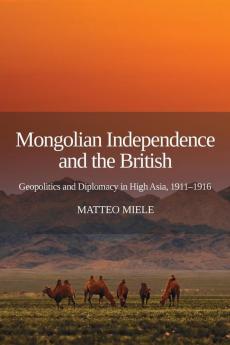
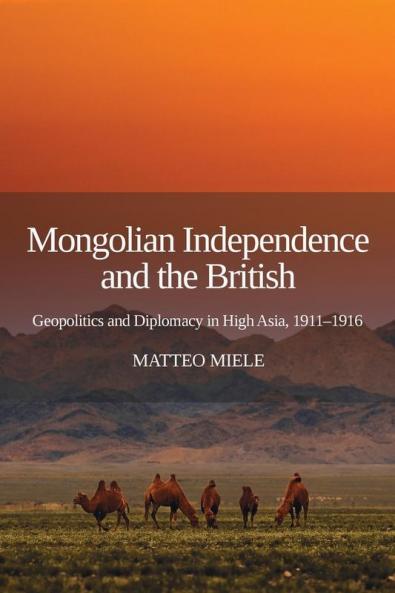
<p>This work focuses on some High Asian diplomatic geopolitical and trade issues from the point of view of the British Empire in the period between the last phase of the Ch'ing dynasty and the early years of the Chinese Republic. In particular the significance for the British of Mongolian independence in the geopolitical dimension of Tibet will be analyzed within the framework of the international equilibrium system that had originated from the Anglo-Russian Agreement of 1907. The geopolitical role of Tibet whose peaks represented one of the great geographical defenses of the British Raj was in fact necessarily called into question by the fall of the Ch'ing Empire and by the declaration of independence at the end of 1911 of Mongolia a country strongly linked for religious cultural and historical reasons to the Land of Snows but connected for political and economic reasons to Russia. </p><p><br></p><p>The research therefore reconstructs the British attempt to use the relationship between Outer Mongolia and Russia to its advantage in a sort of exchange necessary to make Saint Petersburg accept the Simla Convention of 1914 - finally signed by the British and Tibetans without the Chinese - and which came into conflict with what had been decided between the Russians and the British in 1907. As it was possible to study through archival documents largely preserved in The National Archives London Kew the Foreign Office could not find an agreement with Russia on this basis alone but through a much broader diplomatic negotiation that has therefore been reconstructed in detail.</p>

Piracy-free

Assured Quality

Secure Transactions

Fast Delivery

Sustainably Printed
Details
ISBN 13
9781910814642
Publication Date
-03-08-2022
Pages
-238
Weight
-328 grams
Dimensions
-152x229x12.73 mm
