



English




₹4555
₹5450
16.42% OFF
(All inclusive*)
Paperback
Delivery Options
Please enter pincode to check delivery time.
*COD & Shipping Charges may apply on certain items.
Review final details at checkout.
Looking to place a bulk order? SUBMIT DETAILS
Delivery Options
Please enter pincode to check delivery time.
*COD & Shipping Charges may apply on certain items.
Review final details at checkout.
About The Book
Description
Author
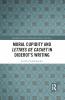
<p>This volume explores the influence of the <i>lettre de cachet</i> on both Diderot’s personal life and his works beginning with an examination of Diderot’s experience as recipient of two such arrest warrants followed by an analysis of his references to these warrants in three of his fictional works <i>Le Père de famille</i> <i>Jacques le fataliste </i>and <i>Est-il bon? Est-il méchant?</i>. A scrutiny of Diderot’s <i>mémoire/lettre </i>novel <i>La Religieuse </i>proposes that on the basis of moral cupidity or self-gain Madame Simonin sends her daughter Suzanne two veiled <i>lettres de cachet </i>that demand her confinement to a convent. The exploration of a fascinating real-life case of Henriette-Émilie de Bautru a young <i>comtesse </i>whose mother confined her to a convent as a result of a <i>lettre de cachet</i> also based on motives of greed leads to an examination of the similarities between Suzanne and the <i>Comtesse </i>in terms of their illegitimacy questioning of authority and subsequent rebellion. A consideration of writing and communication in <i>La Religieuse </i>as they relate to this rebellion leads to an investigation of Diderot’s admiration of the mystery of female genius and artistic creativity as discussed in his essay <i>Sur les femmes</i>. The works of Julia Kristeva especially her <i>Post-Scriptum</i> addressed to Diderot at the end of her work <i>Thérèse mon amour: Thérèse d’Avila</i> serve as a theoretical basis for an interpretation of Suzanne’s experience as victim of a <i>lettre de cachet </i>and her search for a psychological rebirth of her <i>être caché</i>.</p><p></p>

Piracy-free

Assured Quality

Secure Transactions

Fast Delivery

Sustainably Printed
Details
ISBN 13
9781032094038
Publication Date
-30-06-2021
Pages
-152
Weight
-216 grams
Dimensions
-151.89x229.11x8.41 mm
