


English



Paperback
₹6397
(All inclusive*)
Delivery Options
Please enter pincode to check delivery time.
*COD & Shipping Charges may apply on certain items.
Review final details at checkout.
Looking to place a bulk order? SUBMIT DETAILS
Delivery Options
Please enter pincode to check delivery time.
*COD & Shipping Charges may apply on certain items.
Review final details at checkout.
About The Book
Description
Author
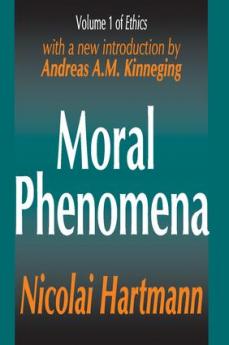
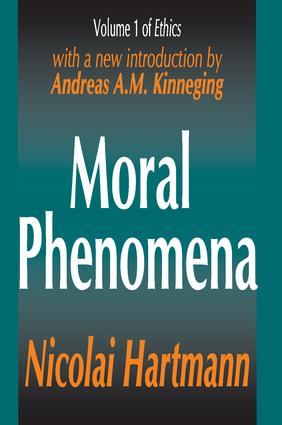
<p>Since the nineteenth century moral philosophy in the Western world has been dominated by utilitarianism Kantianism and relativism. Only a few philosophers have been able to escape from this Procrustean bed. Foremost among these few is Nicolai Hartmann (1882-1950). Together with Henri Bergson and Martin Heidegger Hartmann was instrumental in restoring metaphysics. Hartmann's metaphysics differs markedly from that of both Bergson and Heidegger in his indebtedness to Plato.</p><p>In 1926 Hartmann published a massive treatise <em>Ethik</em> which was translated into English by Stanton Coit and published as <em>Ethics</em> in 1932. <em>Ethics</em> is probably the most outstanding treatise on moral philosophy in the twentieth century. The central concept of the book is value. Drawing upon the pre-modern view of ethics Hartmann maintains that values are objectively given part and parcel of the order of being. We cannot invent values we can merely discover them.</p><p>The first part of <em>Ethics</em> is concerned with the structure of ethical phenomena and criticizes utilitarianism Kantianism and relativism as misleading approaches. After some introductory thoughts concerning the competence of practical philosophy Hartmann discusses the essence of moral values including their absoluteness and ideal being and the essence of the ought. Hartmann is both controversial and compelling. He provides a moral philosophy that rejects the subjectivism of the ruling approaches without taking recourse to older theological notions on the foundation of the ethical. In sum: Hartmann's Ethics constitutes an impressive and preeminent contribution to moral philosophy.</p>

Piracy-free

Assured Quality

Secure Transactions

Fast Delivery

Sustainably Printed
Details
ISBN 13
9780765809094
Publication Date
-31-01-2002
Pages
-394
Weight
-532 grams
Dimensions
-151.89x229.11x20.84 mm
