


English



Paperback
₹4850
₹6273
22.68% OFF
(All inclusive*)
Delivery Options
Please enter pincode to check delivery time.
*COD & Shipping Charges may apply on certain items.
Review final details at checkout.
Looking to place a bulk order? SUBMIT DETAILS

Piracy-free

Assured Quality

Secure Transactions
About The Book
Description
Author
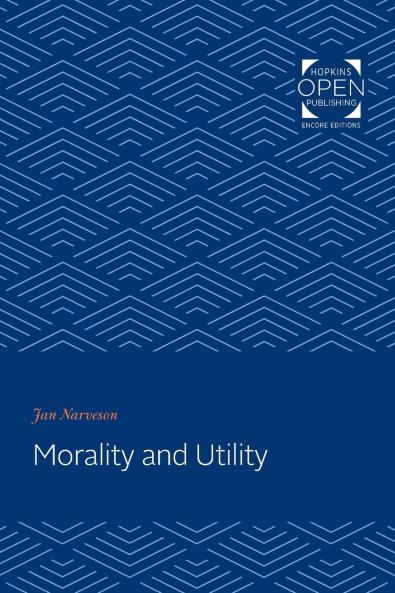
<p>In the past half-century Utilitarianism has fallen out of favor among professional philosophers except in such &quot;amended&quot; forms as &quot;Ideal&quot; and &quot;Rule&quot; Utilitarianism. Professor Narveson contends that amendments and qualifications are unnecessary and misguided and that a careful interpretation and application of the original theory as advocated by Bentham the Mills and Sidgwick obviates any need for modification. Drawing on the analytical work of such influential recent thinkers as Stevenson Toulmin Hare Nowell-Smith and Baier the author attempts to draw a more careful and detailed picture than has previously been offered of the logical status and workings of the Principle of Utility. He then turns to the traditional objections to the theory as developed by such respected thinkers as Ross Frankena Hart and Rawls and attempts to show how Utilitarianism can account for our undoubted obligations in the areas of punishment promising distributive justice and the other principal moral convictions of mankind. He contends that the Principle of Utility implies whatever is recognized to be clearly true in these convictions and that it leaves room to doubt whatever is doubtful in them.<br />Narveson concludes with a rationally forceful proof of the Principle of Utility. In the course of this argument which draws on the most widely accepted recent findings in analytical ethics Narveson discovers an essential identity between the ethical outlooks of Kant and of Mill which are traditionally held to be antithetical. Both thinkers he shows center on the principle that the interests of others are to be regarded as equal in value to one&#39;s own. A new view of Mill&#39;s celebrated &quot;proof of utilitarianism&quot; is developed in the course of the discussion.</p>
Piracy-free
Assured Quality
Secure Transactions
Delivery Options
Please enter pincode to check delivery time.
*COD & Shipping Charges may apply on certain items.
Review final details at checkout.
Details
ISBN 13
9781421430911
Publication Date
-01-08-2019
Pages
-318
Weight
-433 grams
Dimensions
-152x229x18.09 mm
