

English


Hardback
₹7011
₹7952
11.83% OFF
(All inclusive*)
Delivery Options
Please enter pincode to check delivery time.
*COD & Shipping Charges may apply on certain items.
Review final details at checkout.
Looking to place a bulk order? SUBMIT DETAILS

Piracy-free

Assured Quality

Secure Transactions
About The Book
Description
Author
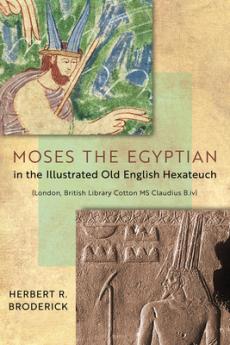
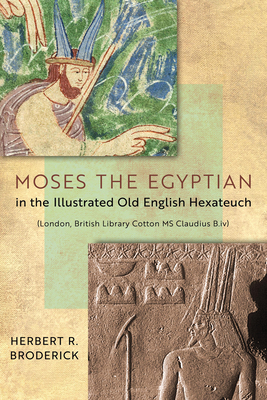
<p>In <i>Moses the Egyptian</i> Herbert Broderick analyzes the iconography of Moses in the famous illuminated eleventh-century manuscript known as the Illustrated Old English Hexateuch. A translation into Old English of the first six books of the Bible the manuscript contains over 390 images of which 127 depict Moses with a variety of distinctive visual attributes.</p> <p>Broderick presents a compelling thesis that these motifs in particular the image of the horned Moses have a Hellenistic Egyptian origin. He argues that the visual construct of Moses in the Old English Hexateuch may have been based on a Late Antique no longer extant prototype influenced by works of Hellenistic Egyptian Jewish exegetes who ascribed to Moses the characteristics of an Egyptian-Hellenistic king military commander priest prophet and scribe. These Jewish writings were utilized in turn by early Christian apologists such as Clement of Alexandria and Eusebius of Caesarea. Broderick's analysis of this Moses imagery ranges widely across religious divides art-historical religious themes and classical and early Jewish and Christian sources.</p> <p>Herbert Broderick is one of the foremost historians in the field of Anglo-Saxon art with a primary focus on Old Testament iconography. Readers with interests in the history of medieval manuscript illustration art history and early Jewish and Christian apologetics will find much of interest in this profusely illustrated study.</p>
Piracy-free
Assured Quality
Secure Transactions
Delivery Options
Please enter pincode to check delivery time.
*COD & Shipping Charges may apply on certain items.
Review final details at checkout.
Details
ISBN 13
9780268102050
Publication Date
-15-11-2017
Pages
-292
Weight
-632 grams
Dimensions
-178x254x23.81 mm
