

English


₹6824
(All inclusive*)
Paperback
Delivery Options
Please enter pincode to check delivery time.
*COD & Shipping Charges may apply on certain items.
Review final details at checkout.
Looking to place a bulk order? SUBMIT DETAILS
Delivery Options
Please enter pincode to check delivery time.
*COD & Shipping Charges may apply on certain items.
Review final details at checkout.
About The Book
Description
Author
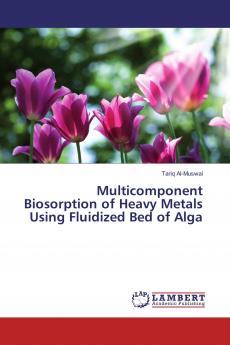
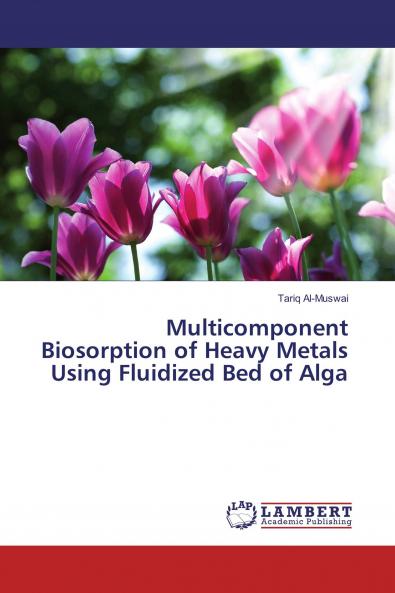
The biosorption of lead cadmium copper and arsenic ions by using native algae were investigated. Experiments were carried out in batch reactor to obtain equilibrium and kinetic data. Experimental parameters affecting the biosorption process such as pH contact time initial metal concentrations and temperature were studied. The optimum pH for removal were found 3 5 4 and 5 for Pb2+ Cd2+ Cu2+ and As3+ respectively. The biosorption of these metals is based on ion exchange mechanism accompanied by release of light metals such as calcium magnesium potassium and sodium. Experimental isotherms data well fitted an ion exchange model and the affinity constant was calculated for each metal. The results showed the ion exchange model was found suitable for describing the biosorption process. Fourier Transformation Infrared Spectroscopy analysis was used to find the effects of functional groups of algae in biosorption process. The results showed that Pb2+ has a greater difference in the peak values of absorbance bands then As3+ and Cu2+ while Cd2+ was the lowest. The experimental data showed that the biosorption of four metals were fitted well the pseudo-second order model.

Piracy-free

Assured Quality

Secure Transactions

Fast Delivery

Sustainably Printed
Details
ISBN 13
9783659686771
Publication Date
-18-05-2017
Pages
-180
Weight
-240 grams
Dimensions
-150x220x9.85 mm
