

English


Hardback
₹2396
(All inclusive*)
Delivery Options
Please enter pincode to check delivery time.
*COD & Shipping Charges may apply on certain items.
Review final details at checkout.
Looking to place a bulk order? SUBMIT DETAILS
Delivery Options
Please enter pincode to check delivery time.
*COD & Shipping Charges may apply on certain items.
Review final details at checkout.
About The Book
Description
Author
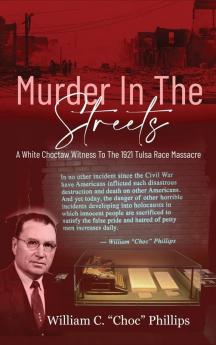
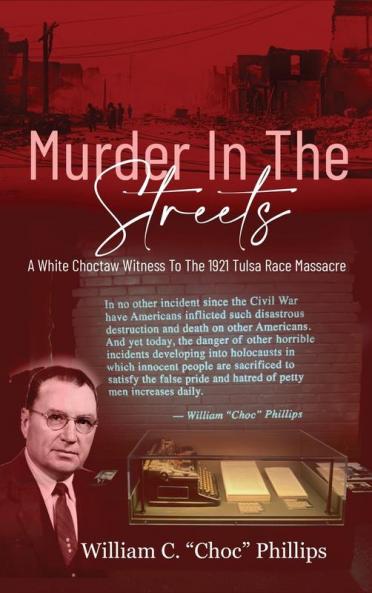
<p>The 1921 Tulsa Race Massacre occurred over two days May 30 and June 1 1921 when a white mob destroyed the African American section of Tulsa Okla. known as the Greenwood District. As a result more than 1250 homes and businesses were destroyed thirty-five square blocks of Tulsa leveled and hundreds of innocent people were injured or dead.</p><p><br></p><p>There have been numerous books and news articles written about the 1921 Tulsa Race Massacre but most of the first-person accounts were given by African Americans. However William C. Choc Phillips was part white and part Native American and an eyewitness to one of the most violent episodes in the history of the United States.</p><p><br></p><p>A teenager and high school student at the time of the 1921 Tulsa Race Massacre Phillips was present when the violence ignited in front of the Tulsa Courthouse and throughout the destruction that followed.</p><p><br></p><p>Phillips and a group of high school friends traveled the streets of Tulsa during the night of May 30 and the day on June 1. At times they were trying to get a better view of what was happening and at times trying to escape the lawlessness. They saw people murdered buildings torched and people treated as less than human.</p><p><br></p><p>The incident left a lasting impression on Phillips and over the years he researched and wrote his account of the 1921 Tulsa Race Massacre. He read most of the news accounts of the time and in later years interviewed other eyewitnesses of the devastation. Phillips attempted to make sense of what had happened and give a balanced report of the event.</p><p><br></p><p>Phillips was never able to get his manuscript published when it was completed in the 1980s. Despite the death and destruction after the passing of sixty years the 1921 Tulsa Race Massacre was not a well-known event on a national level. It was as if people wanted to pretend the violence never happened or at the very least forget about it.</p><p><br></p><p>In 2021 Greenwood Rising opened in Tulsa to commemorate the 100th anniversary of the 1921 Tulsa Race Massacre and more importantly to educate the public. Officials with Greenwood Rising thought William C. Choc Phillips' account was important enough to create a display that showcases the original manuscript and the typewriter that produced it.</p><p><br></p>

Piracy-free

Assured Quality

Secure Transactions

Fast Delivery

Sustainably Printed
Details
ISBN 13
9781681792521
Publication Date
-01-10-2021
Pages
-152
Weight
-304 grams
Dimensions
-152x229x9.53 mm
