


by
Hedy Law
English




Hardback
₹11837
(All inclusive*)
Delivery Options
Please enter pincode to check delivery time.
*COD & Shipping Charges may apply on certain items.
Review final details at checkout.
Looking to place a bulk order? SUBMIT DETAILS

Piracy-free

Assured Quality

Secure Transactions
About The Book
Description
Author
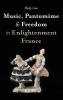
<p>This book explains the relationships between music pantomime and freedom in pre-Revolutionary France. It argues that composers and performers recognized their agency when they attempted from the 1730s through the end of the Old Regime to revive a lost art called &#39;pantomime&#39; for their compositions. In musical settings of pantomimes in French operas and instrumental works leading composers of the time - Rameau Rousseau Gluck and Salieri - used pantomime as a type of expressive dance and acting style that marked an aesthetic rupture between Louis XIV&#39;s absolutist governance and the Enlightenment ideals of free expression. In musical settings of pantomime these composers cultivated various forms of freedom theorized in Enlightenment writings: artistic freedom for the composer; freedom as self-governance; interpretive freedom for spectators; freedom of action for performers; and freedom from dance convention.<br />Thus pantomime was not only a dance genre; it also functioned as an expressive medium for top performers and invited spectators to draw their own interpretative conclusions. Placing the cultural phenomenon of pantomime in the intellectual context of the Enlightenment the book explains how composers helped develop thinking and feeling subjects in pre-Revolutionary France.<br /><br />HEDY LAW is Associate Professor of Musicology at the University of British Columbia Vancouver.</p>
Piracy-free
Assured Quality
Secure Transactions
Delivery Options
Please enter pincode to check delivery time.
*COD & Shipping Charges may apply on certain items.
Review final details at checkout.
Details
ISBN 13
9781783275601
Publication Date
-16-10-2020
Pages
-286
Weight
-502 grams
Dimensions
-156x234x17.46 mm
