

English


Paperback
₹5247
(All inclusive*)
Delivery Options
Please enter pincode to check delivery time.
*COD & Shipping Charges may apply on certain items.
Review final details at checkout.
Looking to place a bulk order? SUBMIT DETAILS

Piracy-free

Assured Quality

Secure Transactions
About The Book
Description
Author
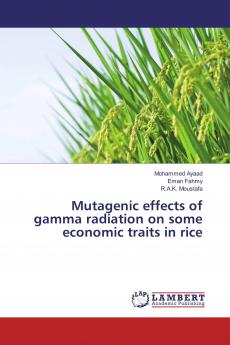
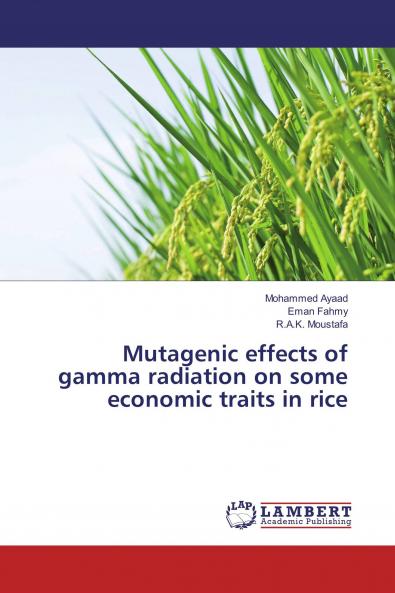
Rice is staple food of more than 60 % of the world’s population especially in developing countries. It plays a significant role in the strategy to overcome food shortage and improvement of self-sufficiency for local consumption and export in Egypt where water scarcity and drought are imminent threat to food security. To fill the gap between the production and consumption because of the increasing of human population from 6.8 to 9 billion people by 2050 we need to improve rice yield at least 40% than the production quantity now worldwide using different breeding methodology. During the last decade induced mutations have also been gaining increasing importance in plant molecular biology as a tool to identify and isolate genes and to study their structure and function. Knowledge of genes controlling important agronomic and quality traits are critical for plant breeders to develop proper strategies and efficiently implement breeding programs. Therefore induced mutations can contribute further to increasing global food production both directly and indirectly by increasing yield potential and stability.
Piracy-free
Assured Quality
Secure Transactions
Delivery Options
Please enter pincode to check delivery time.
*COD & Shipping Charges may apply on certain items.
Review final details at checkout.
Details
ISBN 13
9786134918510
Publication Date
-18-01-2018
Pages
-112
Weight
-156 grams
Dimensions
-150x220x6.35 mm
